- General Videos
- Music
- Economics
- Health
- Travel & Events
- History
- Psychology
- Spirituality
- Movies
- News & Politics
- Kmtyw Combat Sciences
- Ɔbenfo Ọbádélé Kambon Videos
- Ɔbenfoɔ Kamau Kambon: Black Liberation Philosophy
- Science, Tech, Engineering and Math
- Permaculture
- Self-Sustainability
- Living Off Grid
- Yoruba Language Learning
- Education
- Mmɔfra Adesua
- Nana Kamau Kambon Playlist
- Livestream
- Komplementarity Kouples and Revolutionary Singles
- Abibitumi Film Series
- Decade of Our Repatriation
- Kwento xpr
- Live
Top videos




Ɔbenfo Ọbádélé Kambon is a world-renowned master linguist, multi-award-winning scholar and the architect of Abibitumi the oldest and largest Black social education network on the planet.00:15:12 African origins and contributions to combat sciences 12:58 Talks UFOs and disagrees with theory that aliens made ancient pyramids29:34 Advice for Black men37:00 krakkka Concepts of Right & Wrong 48:36 Ancient Egypt vs Kemet55:34 Power of language1:00:25 Nana Thomas SankaraPlease click link below to learn more about Ɔbenfo Ọbádélé Kambon and his work:
https://www.repatriatetoghana.com
https://www.abibitumi.com
https://www.abibitumitv.com
https://conference.abibitumi.com
https://www.sankofajourney.com
https://www.obadelekambon.com
https://www.abibitumi.store



"2AM in Venezuela" (OFFICIAL VIDEO): https://youtu.be/GtvkwgbVKF8
BLACK WINTER (Full Album): https://youtube.com/playlist?list=PLJSMFuicKjJ46p1K9TlqZPRGFSd0M5z9U&si=4WG_YXCGJinM6XEN
Join the Patreon for exclusive videos that you won't find on Youtube: https://www.patreon.com/NTD1814
S U P P O R T
Cash App - $NelsonAmadeus
PayPal- GlobalHitsWorld@gmail.com
EMAIL - KingNeferkare@gmail.com
Twitter @NTDessalines
Instagram @NelsonAmadeus
TURN ON POST NOTIFICATIONS.

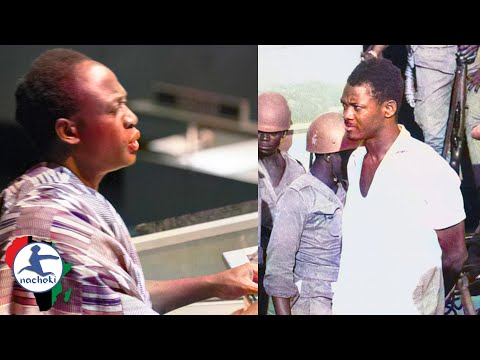
Welcome to the Great African Leadership Series where we feature great, inspirational Speeches and quotes from African Leaders.
Rare Full Color Kwame Nkrumah Speech Shaming the United Nations over Patrice Lumumba's Assassination
#africanspeech #speech
Thank you for watching 2nacheki which means 'We Are Watching' in Swahili slang. We do videos on #Africavideos #AfricaContent #AfricaLists #AfricaNews #AfricaDance #AfricaSpeeches
To get amazing deals on all our merch starting from 10% off and free shipping visit https://teespring.com/stores/2nacheki
Membership: https://www.youtube.com/channe....l/UCG7uFJVZsxQRwDsso
Patreon: https://www.patreon.com/2nacheki
Website: http://2nacheki.tv/


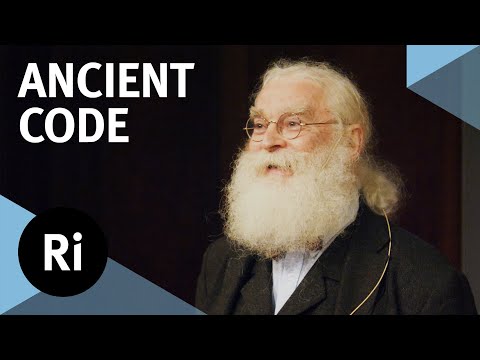

Writing is generally agreed to be among the greatest inventions in human history, perhaps the greatest invention, since it made history possible.
Subscribe for regular science videos: http://bit.ly/RiSubscRibe
You can read more about Irving's quest to explore the Noah's Ark myth in "The Ark Before Noah: Decoding the Story of the Flood": https://geni.us/zU95bVO
or learn more about cuneiform writing in "Cuneiform": https://geni.us/eMPb
Writing seems to have been invented in the late fourth millennium BC in Mesopotamia in the form of wedge-shaped marks pressed into soft clay with a reed stylus: the script known as cuneiform. Through his work on this ancient language, Irving Finkel, has uncovered amazing secrets from over five thousand years ago, including the story behind Noah’s ark.
Irving Finkel is the curator in charge of cuneiform inscriptions on tablets of clay from ancient Mesopotamia at the British Museum, of which the Middle East Department has the largest collection of any modern museum. This work involves reading and translating all sorts of inscriptions, sometimes working on ancient archives to identify manuscripts that belong together, or even join to one another. He is the author of The Ark Before Noah: Decoding the Story of the Flood.
This talk was filmed in the Ri on 18 January 2019.
---
A very special thank you to our Patreon supporters who help make these videos happen, especially:
Dave Ostler, David Lindo, David Schick, Erik Shepherd, Greg Nagel, Ivan Korolev, Joe Godenzi, Julia Stone, Kellas Lowery, Lasse T. Stendan, Lester Su, Osian Gwyn Williams, Paul Brown, Radu Tizu, Rebecca Pan, Robert Hillier, Roger Baker, and Will Knott.
---
Subscribe for regular science videos: http://bit.ly/RiSubscRibe
The Ri is on Patreon: https://www.patreon.com/TheRoyalInstitution
and Twitter: http://twitter.com/ri_science
and Facebook: http://www.facebook.com/royalinstitution
and Tumblr: http://ri-science.tumblr.com/
Our editorial policy: http://www.rigb.org/home/editorial-policy
Subscribe for the latest science videos: http://bit.ly/RiNewsletter
Product links on this page may be affiliate links which means it won't cost you any extra but we may earn a small commission if you decide to purchase through the link.


September 2025. France's government collapses. Prime ministers ousted one after another. Protests engulf Paris. Debt spiraling past 110% of GDP. Energy prices up 40% since 2022.
The headlines blame political chaos. Budget cuts. Macron's failures.
But that's not the real story.
The real story starts in Niger. With uranium. And a $500 billion rejection that nobody saw coming.
For 80 years, France paid Niger pennies for uranium worth billions. Niger got €100 million annually—just 5% of its budget. France? They turned that uranium into $74 billion in nuclear energy exports. Built an empire on African resources while telling the world they were "partners."
When Niger finally asked for a fair deal—raising royalties from 5.5% to 12%—French executives laughed. Called them dreamers. Shut down production to pressure them into submission.
Big mistake.
Because what France didn't understand is that this generation of Africans isn't asking for permission anymore. They're not begging. They're not waiting.
Mali, Burkina Faso, Niger, Chad, Senegal—one by one, they cut the cord. Kicked out French troops. Stopped depositing reserves in Paris. Renegotiated contracts. And when France tried to hold onto Niger's uranium? Niger nationalized the mines.
The economic model that kept France wealthy for nearly a century? Gone. The cheap uranium that powered 65% of French electricity? Cut off. The financial flows that propped up French borrowing? Dried up.
And now we're watching France discover what happens when extraction ends and reality hits.
This isn't just about France and Africa. It's about every system built on exploitation. Every relationship that only works when one side doesn't know they're being used. Every empire that forgets empires fall.
In this video, I'm breaking down the numbers they don't want you to see. The predictions experts made that the media ignored. And why Germany thrives without exploiting anyone while France crumbles without Africa.
If you want to understand the real forces reshaping global power—the ones the headlines miss—you're in the right place.
Hit subscribe. This is just the beginning.
Sources in pinned comment.
#france #africa #niger #uranium #geopolitics #panafrican #cfa #economics #francecollapse #africanunity
welcome to Africa Today a place where we showcase Africa's financial potential and help you obtain financial freedom
TO JOIN OUR MEMBERSHIP CLICK THE LINK
https://www.patreon.com/AfricaTodayClub763
BOOK A SESSION WITH US THROUGH
https://www.patreon.com/AfricaTodayClub763/shop/one-on-one-consultation-129020?source=storefront
JOIN OUR MEMBERSHIP THROUGH
https://www.youtube.com/channe....l/UCQhku_T68i-szD9Qj
OUR PAYPAL
http://paypal.me/AfricaToday
Don't forget to Like, Share and Subscribe

A documentary on the Roman invasion of Nubia and the Kingdom of Kush (24 BC).
In this history documentary we explore another one of the forgotten wars when the Roman army marched beyond the frontiers to explore parts unknown. However in order to contextualize this expedition we spend time exploring the ancient History of Egypt and the History of Nubia. We begin by looking at the geographic features of the Nile which influenced the development of the civilizations along its banks. Next we look at the intertwined development of both Egyptian and Nubian kingdoms over the eras. This covers the overlap of the Old Kingdom of Egypt, the Middle Kingdom of Egypt, and the New Kingdom of Egypt with the Kingdom of Kerma, the Kingdom of Napata, and the Kingdom of Meroe. Finally we discuss how the Roman Empire became involved in Egypt and African history. This began with Pompey and Caesar during their civil war. When Rome then chose to support the Ptolemaic rule of Cleopatra they then further became invovled. The queen would support Mark Antony in his civil war against Octavian but the eastern forces would ultimately lose at the Battle of Actium. Following this event, Octavian, now turned Augustus, would annex Egypt. Over the following decades, the emperor would embark on fresh conquests to win gold and glory. One was the Roman Invasion of Arabia and the other was the Roman invasion of Ethiopia. We covered the former in a previous video and spend the remainder of our time seeing how the conflict into Nubia would unfold. This involves a fascinating series of campaigns fought between Kandake Amanirenas and Gaius Petronius with armies of 30,000 and 10,000 respectively. Its a fascinating look into the African history that rarely gets covered.
Watch more African history documentaries with MagellanTV here: https://try.magellantv.com/invicta. It's an exclusive offer for our viewers! Start your free trial today. MagellanTV is a new kind of streaming service run by filmmakers with 3,000+ documentaries! Check out our personal recommendation and MagellanTV’s exclusive playlists: https://www.magellantv.com/explore/history.Sources and Suggested Reading:“Geography - Book 16-17” by Strabo“The Natural History - Chapter 35” by Pliny the Elder“Histories - Book 3, 7” by Herodotus“History of Africa” by Kevin Shillington“The Kingdoms of Kush” by The National GeographicCredits:Research = InvictaWriting = InvictaNarration = InvictaArtwork = Gabriel Cassata#history#rome#africa