- General Videos
- Music
- Economics
- Health
- Travel & Events
- History
- Psychology
- Spirituality
- Movies
- News & Politics
- Kmtyw Combat Sciences
- Ɔbenfo Ọbádélé Kambon Videos
- Ɔbenfoɔ Kamau Kambon: Black Liberation Philosophy
- Science, Tech, Engineering and Math
- Permaculture
- Self-Sustainability
- Living Off Grid
- Yoruba Language Learning
- Education
- Mmɔfra Adesua
- Nana Kamau Kambon Playlist
- Livestream
- Komplementarity Kouples and Revolutionary Singles
- Abibitumi Film Series
- Decade of Our Repatriation
- Kwento xpr
- Live
Top videos


Follow us on the day we arrive in the beautiful Sierra Leone.
Thanks to our Sponsors Crafted Marketing Solutions, Zina Craft and Fambultik Tours, Amadu M****ally.
Thank you for your contributions to Bla Xit we are going places Bla Xit family. Thank you for your support thoroughout 2019 and I hope your ongoing support through 2020. This is our decade to go back to our roots. Please continue to support us via Paypal using BopCollective@yahoo.com or via https://www.patreon.com/join/Blaxit


To purchase the book and the movie in HD, follow the link below. The construction of the Great Pyramid and the True History of Humanity revealed.
https://grande-pyramide-k2019.com/book-dvd/
*********************
The construction of the Great Pyramid and the True History of Humanity revealed.
To support the film and its production please follow the Paypal link below.
Paypal https://www.paypal.me/gpk2019
Correction: My speech was recorded, in May 2020. At that time, I didn't preview to monetise the film. But with the national economic crisis, monetization has become essential for me, so the movie is now monetised.
I devoted approximately 1.296.000 minutes to this film. If you feel that the movie meets your expectations, you are invited to participate by donating in the link Paypal above.
Aiming to support the voluntary work of my team.
#greatpyramidk2019 #k2019 #fehmikrasniqi
************************************
https://youtu.be/IgN2DuOW7yU
The Egyptian Meter. The experience.
--------------------------------------
Today we are in 2020.
Why then K 2019 ?
Because the year 2019, marked the beginning of the new History of mankind with the World Première of this documentary film.
-------------------------------------
The movie has actually official subtitles in: English, Turkish, Danish(Not yet official) and French.
French version of Great Pyramid K 2019
https://www.youtube.com/watch?v=CcUjwt0M31I
English subtitle file to use for traduction in other languages.
https://drive.google.com/file/....d/1WfWF0bgCnxEu7JIZs
---------------------------
0:00 • Introduction
1:11 • Director's speech
5:49 • The Giza Plateau and the Great Pyramid
15:43 • Academic theories on the construction of the pyramid
25:02 • Alternative theories
29:33 • The theory of Joseph Davidovits
41:03 • The discovery of the numeration by 10
43:04 • The discovery of the Meter - Heliacal rising of Sirius - The beginning of geometry
50:23 • The discovery of Pi 3.14
52:36 • The invention of the Royal Cubit 52.36
54:02 • The Invention of the Imperial System - Applied Mathematics
1:00:02 • The plans for building the pyramid
1:07:08 • The beginning of the construction of the Great Pyramid - The underground chamber
1:15:47 • The equinoxes
1:26:50 • Molten granite
1:44:41 • The King's room
1:52:11 • The clock
2:00:24 • The pose of the pyramidion
2:07:24 • The King's ceremony
2:16:30 • Black Egypt, Negroid Kemet
2:23:53 • The trip to America
2:32:03 • The crossing of the Berque brothers
2:43:03 • Egyptian-African immigration to America
2:51:15 • The trip to Tiwanaku Peru
2:57:05 • The trip to Easter Island
3:02:37 • The trip to Australia
3:07:20 • Immigration in India - Cambodia - Indonesia
3:16:34 • The Apocalypse, Egypt - Greece
3:20:54 • Transmission - Freemasonry
3:26:59 • Conclusion
3:33:19 • Film credits
------------------------------------------------------------------
Thank you for sharing
Website Official
https://grande-pyramide-k2019.com/
Facebook
https://www.facebook.com/fehmi.krasniqi.9421/
Youtube channel: http://www.youtube.com/c/FehmiKrasniqi-GP-K2019
With PEACE, LOVE and INTELLIGENCE.
Fehmi Krasniqi



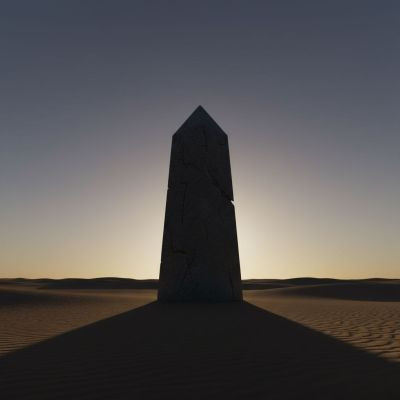
Nkyinkyim is an art Installation/monument (work in progress) by Ghanaian artist Kwame 'KABE' Akoto-Bamfo. The project is part of Ancestor Project (www.ancestorprojectgh.com)-which is an effort to educate and rekindle youth interest in African heritage. Ancestor Project is also an initiative of the same artist.


Bro. Ldr. Mbandaka engages a critical analysis of what is taking place in Niger, Burkina Faso, Guinea & Mali, as well as the proposed ECOWAS invasion o Niger.
SUPPORT GOTKUSHTV: https://www.patreon.com/GotKushTV
• SUBSCRIBE • LIKE • COMMENT • SHARE
••••••••••••••••••••••••••••••••••••••••••••••••••
Welcome to gotkushTV/GKTV “the UK’s No.1 Conscious Platform
Find “gotkushtv” on:
► YouTube: https://www.youtube.com/gotkushtv
► Instagram: http://instagram.com/gotkushtv/
► https://www.facebook.com/gotkushtv
► Twitter: https://twitter.com/gotkushtv




John Oliver discusses chocolate, cocoa farming, and, of course, some facts that will make Halloween a little weird.
Connect with Last Week Tonight online...
Subscribe to the Last Week Tonight YouTube channel for more almost news as it almost happens: www.youtube.com/lastweektonight
Find Last Week Tonight on Facebook like your mom would: www.facebook.com/lastweektonight
Follow us on Twitter for news about jokes and jokes about news: www.twitter.com/lastweektonight
Visit our official site for all that other stuff at once: www.hbo.com/lastweektonight