- General Videos
- Music
- Economics
- Health
- Travel & Events
- History
- Psychology
- Spirituality
- Movies
- News & Politics
- Kmtyw Combat Sciences
- Ɔbenfo Ọbádélé Kambon Videos
- Ɔbenfoɔ Kamau Kambon: Black Liberation Philosophy
- Science, Tech, Engineering and Math
- Permaculture
- Self-Sustainability
- Living Off Grid
- Yoruba Language Learning
- Education
- Mmɔfra Adesua
- Nana Kamau Kambon Playlist
- Livestream
- Komplementarity Kouples and Revolutionary Singles
- Abibitumi Film Series
- Decade of Our Repatriation
- Kwento xpr
- Live
Top videos

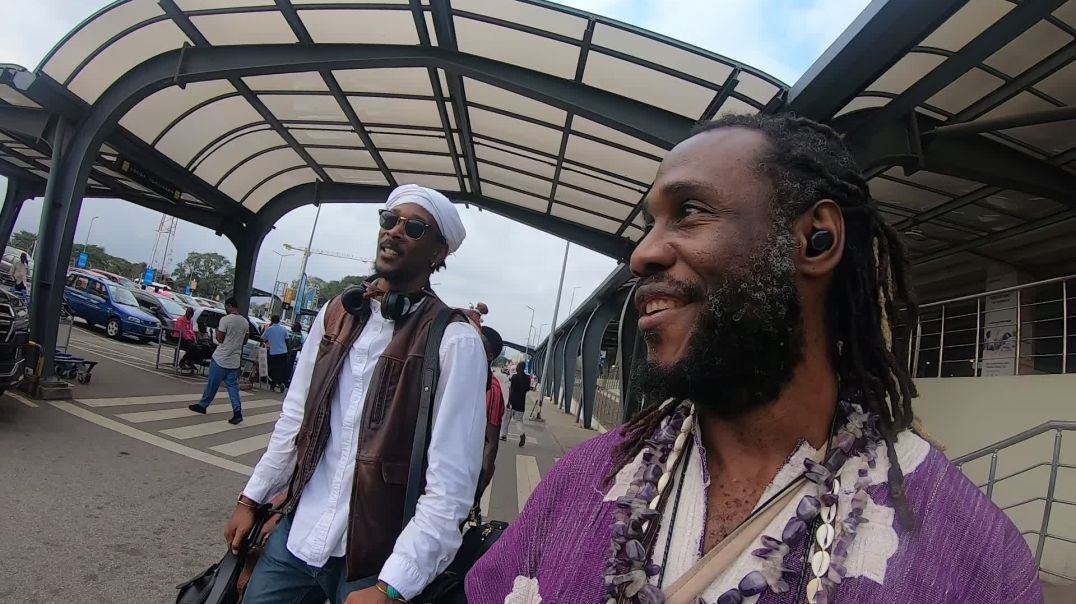


Museums have long been unwelcoming or intimidating spaces for many, particularly ordinary Africans. In this powerful talk, Kwame Akoto Bamfo reimagines the museum experience through the lens of African heritage and community engagement. By embracing change as a constant force, Kwame demonstrates how interactive art and inclusive spaces can serve as healing, dialogue, and transformation mediums.
Through his work, he challenges traditional perceptions of museums and invites communities to reconnect with their identity and heritage. This talk is a compelling exploration of how art can celebrate cultural freedom and inspire others to embrace their role in shaping change narratives. Kwame Akoto-Bamfo is a Ghanaian sculptor, educator, and activist renowned for his dedication to preserving African history and promoting restorative justice through art. He earned his Bachelor of Fine Arts (BFA) and Master of Fine Arts (MFA) in painting and sculpture from the Kwame Nkrumah University of Science and Technology.
His seminal work, the Nkyinkyim Installation, is an evolving art project comprising over 1,500 portraits of Africans in the diaspora. This installation pays homage to the victims of the Transatlantic slave trade and is prominently featured at the National Memorial for Peace and Justice in Montgomery, Alabama.
In 2017, Akoto-Bamfo gained international attention with his "Faux-Reedom" exhibition, which featured 1,200 sculpted heads representing Ghana's enslaved ancestors. This powerful display questioned Ghana's independence and highlighted neo-colonial legacies.
Beyond his installations, Akoto-Bamfo actively participates in public speaking, research, and lectures, focusing on archiving and promoting African history and cultural heritage. His work has been featured in various documentaries and miniseries, including "Enslaved" (2020) and "The Art of Healing" (2022).
His contributions to art and activism have earned him several accolades, such as the GUBA Influential Artist of the Year in 2019 and the inaugural Kuenyehia Prize for Contemporary Art.
Through his art, Kwame Akoto-Bamfo continues challenging historical narratives, fostering healing, and inspiring restorative justice across the African diaspora. This talk was given at a TEDx event using the TED conference format but independently organized by a local community. Learn more at https://www.ted.com/tedx

New edition of "The Developmental Psychology of the Black Child": http://www.realityspeaksbookst....ore.com/dramwidepsof
***This text has been fortified — formatted with a simplified expanded table of contents beginning each chapter, strengthened and updated with charts and illustrations, fitted with subject and name indexes, an expanded bibliography, revised endnotes and improved typography for a user-friendly presentation and seamless utilization. The original manuscript numbered over 500 typed pages of which 350 were used. In reviewing the full original work we found certain unused sections could be reworked and re-presented in a future work. Such areas dealing with the historical black family, courtship and parental planning were left out due to at least financial constraints give the time. Black access to the publishing industry was censored and personal computing much in its infancy or not available. – SNP (Editor)

“It was Martin’s precious blood. This blood was shed for us.’ Jesse puts his hands in the blood and wipes it on his shirt. What do you do in a moment like that?” — Andrew Young on Jesse Jackson shortly after MLK, Jr. was shot
Who Killed MLK? The Question STILL Remains
Every 3rd Monday in January, we hear Rev. Martin Luther King, Jr’s famous, “I Have A Dream” speech, but if you research this still mysterious murder—and even deeper, the days that led up to his assassination—you’ll find it really was (and continues to be) a nightmare!
This nightmare became even more deceitful when white media labeled James Earl Ray the lone assassin. While most accepted, there are those that knew there was another side of the story that wasn’t been heard.
Find out about Jesse Jackson’s role in my 4th book, ‘Who Iz the Boulé?: The History of America’s First Black Fraternity and the Derailment Toward Afrikan Self-Reliance available in paperback, audiobook, eBook, and digital PDF.
Visit
http://daghettotymz.com for details (link also in Bio).
Each one REACH MANY! ✊🏿❤🖤💚
.
.
.
#DaGhettoTymz30thYear #MLK #WhoIsTheBoule#AfricanHistoryMonth365 #TheHistoryYouDontKnow


Full presentation: https://www.youtube.com/watch?v=Q1GFqTGpvzg
This is the fuller version of the presentation I delivered at the Re-Engaging Pan-Africanism Conference at Birmingham City University, Dec 2018.
The presentation explores the relationship between Culture & Economics as an attempt to:
Rescue "culture" from reductive definitions by demonstrating the relationship between it & economic development.
Demonstrate how revolutionary movements have pursued economic development from a culturally appropriate foundation.
Its pre-recorded, but will be broadcast with a live chat. I look forward to hearing your feedback.
------------------------------------------------------------
► Subscribe: https://www.youtube.com/shakar....aspeaks/?sub_confirm
► Twitter https://twitter.com/ShakaRaSpeaks
► Facebook: https://www.facebook.com/ShakaRaSpeaks/
► Instagram: https://www.instagram.com/shakaraspeaks/