- General Videos
- Music
- Economics
- Health
- Travel & Events
- History
- Psychology
- Spirituality
- Movies
- News & Politics
- Kmtyw Combat Sciences
- Ɔbenfo Ọbádélé Kambon Videos
- Ɔbenfoɔ Kamau Kambon: Black Liberation Philosophy
- Science, Tech, Engineering and Math
- Permaculture
- Self-Sustainability
- Living Off Grid
- Yoruba Language Learning
- Education
- Mmɔfra Adesua
- Nana Kamau Kambon Playlist
- Livestream
- Komplementarity Kouples and Revolutionary Singles
- Abibitumi Film Series
- Decade of Our Repatriation
- Live
Top videos


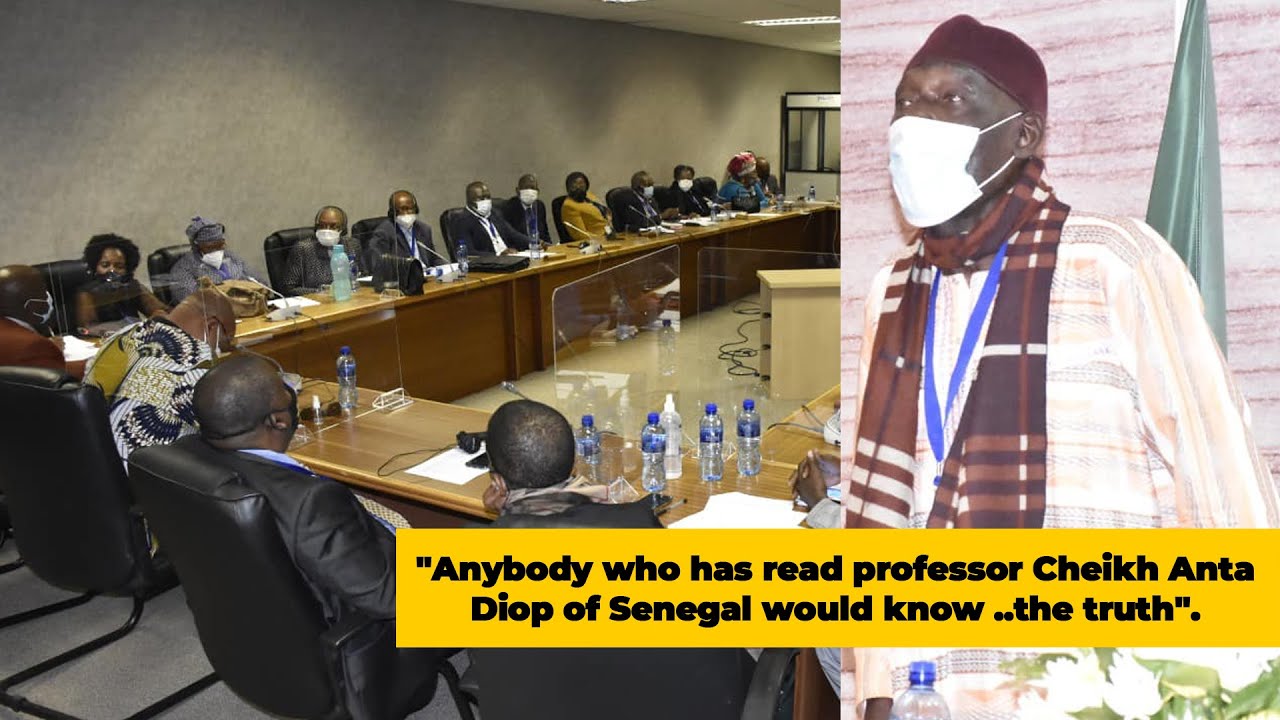

"The question I want to ask is why is Africa the richest continent in the world? I would say in every term, even in terms of water, why is Africa the poorest? Why are our people the wretched of the earth? I think we parliamentarians what we should be asking all the time is why are we seeing to be the Wretched of the Earth? When we should be the richest of the earth, why?"
- Sidia Jatta Gambian Lawmaker, member of PDOIS a Gambian Pan-African Political Party.
You can follow us on Facebook: https://www.facebook.com/eyegambia/
Instagram https://www.instagram.com/eyegambia/
Visit our Website: https://eyegambia.org
#africa




Nnamdi Kanu is the leader of a separatist group calling for an independent State of Biafra. His followers call themselves the 'Indigenous People of Biafra' and they've not given up their dream of their own homeland in southeastern Nigeria. The region has seen a surge in attacks, with some 130 police officers killed this year alone. In May, Nigeria's security forces launched an operation to quell the violence which many fear may lead to a new war.
But the conflict between Biafran separatists and the Nigerian government is much older than this recent outbreak.
Meanwhile, reports from Cameroon indicate English speaking separatist militias have joined forces with their Nigerian counterparts. A development that has led to fears of an acceleration in violence. The Biafran secessionists and the Ambazonian Defence Force in southwestern Cameroon share a common border, and a joint purpose: to establish their own states. They say they are already sharing weapons.
One way to defuse the crisis in Nigeria would be good governance. Yet for some in the region it was actually the election of President Muhammadu Buhari, himself a veteran of the Biafran war, that reawakened calls for independence. Now the arrest of Nnamdi Kanu has only heightened tensions.
Subscribe: https://www.youtube.com/user/d....eutschewelleenglish?
For more news go to: http://www.dw.com/en/
Follow DW on social media:
►Facebook: https://www.facebook.com/deutschewellenews/
►Twitter: https://twitter.com/dwnews
►Instagram: https://www.instagram.com/dwnews
Für Videos in deutscher Sprache besuchen Sie: https://www.youtube.com/dwdeutsch
#Biafra #Ambazonia #Separatism


CULTURALLY RELEVANT PEDAGOGY IN MATHEMATICS: A CRITICAL NEED
Dr. Shelly M. Jones is Associate Professor at Central Connecticut
State University. Her interests include culturally relevant
mathematics, connecting mathematics and music, and students’
mathematics beliefs. She contributed to The Brilliance of Black
Children in Mathematics: Beyond the Numbers and Toward a New
Discourse.
This talk was given at a TEDx event using the TED conference format but independently organized by a local community. Learn more at http://ted.com/tedx

HAPI Talks with Dr. Runoko Rashidi about the African presence in Early Europe.
Please visit www.hapifilm.com to get a copy of the Groundbreaking documentary film HAPI and all the latest HAPI gear.
Don't forget to LIKE, SHARE & SUBSCRIBE to our channel so that we can continue to bring you excellent programming.
Cash app: $hapifilm




The Image of AFRICA has been DISTORTED around the WORLD & We are CHANGING the NARRATIVES via YOUTUBE videos One Country At Time.Until the HISTORY of AFRICA is told by AFRICANS, the story of GREATNESS will always GLORIFY the IMPERIALISTS!.
HAVE YOU SUBSCRIBED YET?
https://www.youtube.com/c/WODEMAYA
BOOK ONE on ONE CONSULTANCY WITH WODEMAYA
https://wodemaya.me/consultation/
Support Our Africa Travels
https://www.patreon.com/wode_maya
Paypal
https://paypal.me/mayaempire
OUR OFFICE CONTACT
+233591519551
SHOP YOUR AFRICAN WEARS FROM MY SISTER
https://dukezfashionline.com/
FOR ENQUIRIES & SPONSORSHIP
hello@wodemaya.africa
FOLLOW ME ON TWITTER
https://twitter.com/wode_maya
INSTAGRAM
https://www.instagram.com/mrghanababy
FACEBOOK
https://www.facebook.com/Wodemaya99/
We Love You!



For copyright matters, takedown, or complaint please contact: historicalafrika@gmail.com
In this episode of Truth Africa Series (brought to you by Historical Africa), we will be reacting to Dr. Henrik Clarke speech on religion in Africa.
The colonization of Africa was not just about political control; it also aimed to reshape African societies in the image of the colonizers.
One way this happened was through religious imposition. European powers, driven by a belief in their cultural and religious
superiority, sought to convert Africans to Christianity, often suppressing indigenous religions in the process. This cultural assimilation
served to consolidate control and legitimize colonial rule.
Religion has often been an instrument used to maintain power and control over populations. In the context of Africa, religion
was used as a tool to justify economic exploitation and the subjugation of Africans. Missionaries preached the superiority of
European Christianity, portraying African religions as primitive or demonic, and using this narrative to justify colonization and the
extraction of Africa's resources.
The conversion of Africans to foreign religions was also strategic for maintaining political and social control. By imposing their
religions, colonizers sought to weaken traditional societal structures, including indigenous spiritual practices, which often played a
significant role in governance and cultural identity. Conversion to foreign religions served to alienate Africans from their traditional
roots, making them more submissive to colonial authority.
Music:
yugen emotional
Source: wwww.choisc.com
Licensed under creative commons.
✅COPYRIGHT DISCLAIMER
Historical Africa doesn't fully own some of the materials compiled in its videos. It belongs to people or organizations who
ought to be respected. If used, it falls under the following provisions: Copyright disclaimer section 107 of the Copyright Act 1976.
"Fair use" is allowed for purposes such as criticism, comment, news reporting, teaching, scholarships, and research.
✅ If you are the owner of the materials used in this video, contact us, and we will follow your request immediately:
historicalafrika@gmail.com
#africa #religion #speech