








- General Videos
- Music
- Economics
- Health
- Travel & Events
- History
- Psychology
- Spirituality
- Movies
- News & Politics
- Kmtyw Combat Sciences
- Ɔbenfo Ọbádélé Kambon Videos
- Ɔbenfoɔ Kamau Kambon: Black Liberation Philosophy
- Science, Tech, Engineering and Math
- Permaculture
- Self-Sustainability
- Living Off Grid
- Yoruba Language Learning
- Education
- Mmɔfra Adesua
- Nana Kamau Kambon Playlist
- Livestream
- Komplementarity Kouples and Revolutionary Singles
- Abibitumi Film Series
- Decade of Our Repatriation
- Kwento xpr
- Live
Top videos



ORFC Global 2021 Session
Land theft is not a thing of the past. Samwel, Kathryn, Angie and June will be talking about the different ways communities are discriminated against through land theft and dispossession. Their conversation will focus on understanding that true food sovereignty demands local control of land. Samwel’s Maasai community has faced illegal sales of their land to foreign companies; Kathryn, representing KMP (the Peasant Movement of the Philippines), has been on the frontlines of organizing to gain land rights for the nine out of ten Filipino farmers that do not own the land they till. The Provosts have been the target of predatory loans, historical deprivation and racial discrimination. Together, they will explain how ownership of land is not a narrative around regeneration or sustainability. It is an argument around sovereignty over the very land they and their ancestors tended. To be truly food sovereign, the land must be in the hands of the local communities.
Speakers:
Samwel Nangiria
Kathryn Manga
June and Angie Provost
Chair:
Freya Yost
#ORFCGlobal
https://orfc.org.uk/





Greetings Bla Xit family
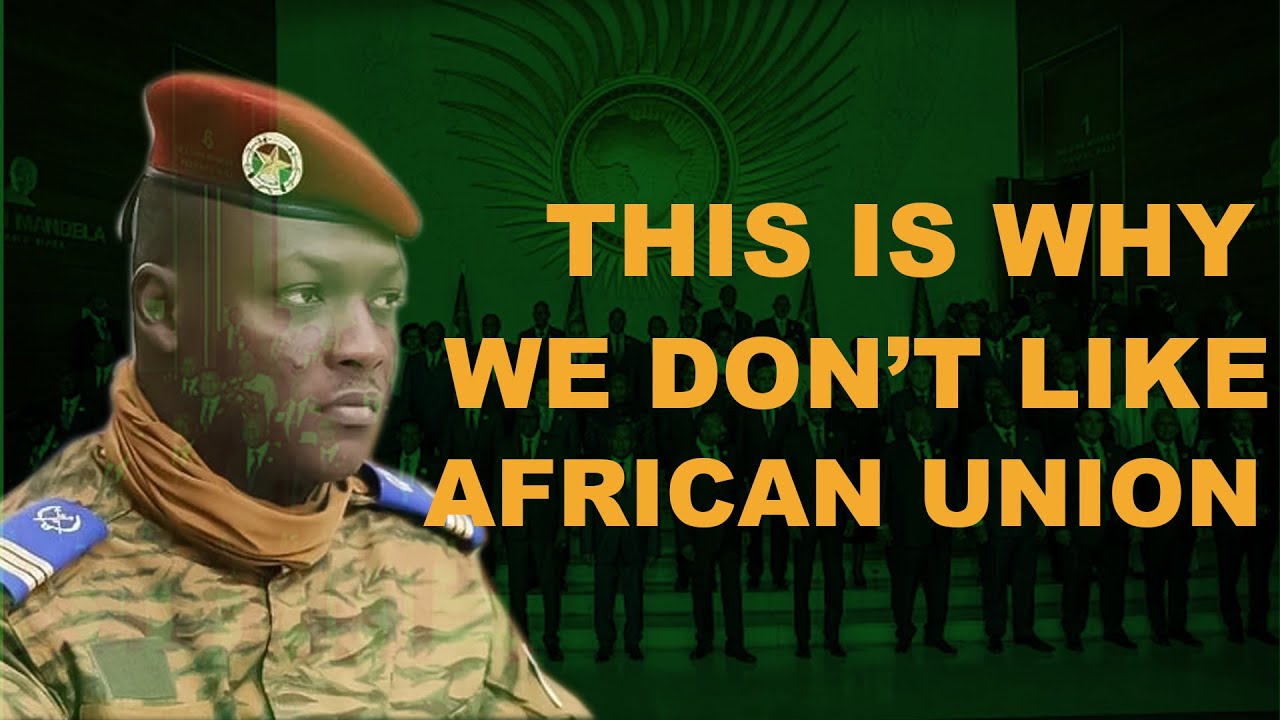
I have been moved by the videos you have sent to us so much. In this Bla Xit Messenger video, it features Yayo who is an African born in Germany. He shares his thoughts and life experiences and gives us great advice based on his perception of both Europe and Africa.
Yayo's words resonates with me in such a strong way. Like all the other Bla Xit Messengers, he had me talking to the screen agreeing with them. Please remember this is our Bla Xit Messengers experience and their input is invaluable to us. So please show them love. Like, share, comment and subscribe!
Become a Bla Xit Messenger (Subscribers only) by sending your video clip to blaxithome@gmail.com
If you would like to support the channel so we can continue producing our content, you can send your donation via PayPal to bopcollective@yahoo.com
Special thanks to Caroline Knight for her donation to the Bla Xit channel.
Special thanks also to our friend and YouTuber Wode Maya who helped set-up the Bla Xit channel. You can follow him on YouTube www.youtube.com/user/MrGhanaBabyyy


1. Cash App: $obenfoobadele
2. Zelle: akyeame.kwame@gmail.com
3. Bitcoin (bc1qtkma7kc8say5rnqtgkrafs65kthqlsan28axf5)
4. MTN Mobile Money (+233247146063)
5. Credit card/paypal using https://www.abibitumi.com/crowdfund
6. Paypal: me@obadelekambon.com

![The Forces of Induction [1969]](https://i.ytimg.com/vi/PAAfFgyWvB4/hqdefault.jpg)
This is one of several films made at Imperial College London in conjunction with ICI. The entire film, except for a short end sequence, was shot in the laboratory of Professor Eric Laithwaite at Imperial College London. This is one of many examples demonstrating electromagnetic forces and in particular the linear induction motor for which Eric Laithwaite was famous. Many of what he called his 'toys' are seen, these are models that help demonstrate the concepts and forces of electromagnetic induction etc.
This was currently the best transfer from 16mm film that we had of this unique engineer in his 'work place', but for a better quality version please now go here: https://youtu.be/CmKF72CPR0s
http://wwwf.imperial.ac.uk/blo....g/videoarchive/2009/


Description
In this video we take a look at the Constitution Laws and Rights that governed the African people prior to colonization. These Laws were summarized by Dr. Chancellor Williams.
There are 21 Laws and 20 Rights
You can buy his BOOK here: https://www.amazon.com/Destruc....tion-Black-Civilizat
Support me on Patreon!: patreon.com/KueliMika
Contact me here:
dimbdmc14@gmail.com
Ignore these
Africa, Law, justice, constitution, Chancellor Williams, the destruction of black civilization, african laws, african human rights, human rights
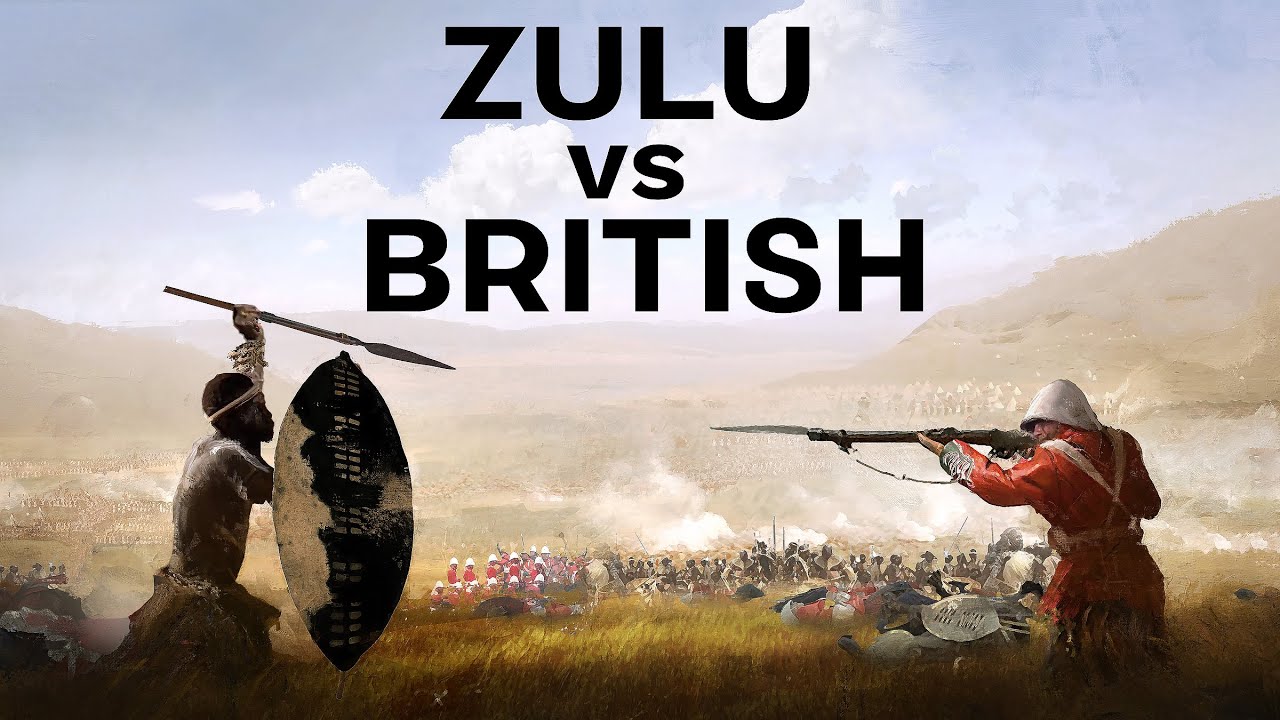

The Anglo-Zulu War erupts as British troops cross into the Zulu Kingdom of present-day South Africa. Behind King Cetshwayo, the mighty Zulu warriors make a defiant stand against the largest empire on earth in fateful battles at Isandlwana, Rorke’s Drift, and Ulundi. What follows is disastrous and fateful British vs. Zulu combat.
—----------------
SUPPORT OUR CHANNEL
Join the Patreon here!
https://www.patreon.com/historydose
ORIGINAL ART PRINTS
https://joseph-feely.pixels.co....m/collections/histor
COOL HISTORY MERCH
Buy episode-themed merch here!
https://www.redbubble.com/people/HistoryDose/shop
Big thanks to Siyabonga Makhathini for supplying us with a traditional Zulu chant!
https://www.youtube.com/c/siya....bongamakhathini/feat
Music licensed through Artlist, Epidemic Sound, and Envato
—------
A special thanks to all of our Patreon supporters, especially:
Andre Vo
Bug VS Windshield
Nathan Racher
Matthew Sammon
Broc Smith
Freyr
Cameron Anders
Andy Ortega
Evan C
loljayzus
Carl Johnson
D. O. Christian Rieger
Nick Stringari
Christopher
NightDocs
Frausty the Snowman
Sean
—------------
SOURCES
David, S. (2004). Zulu : the heroism and tragedy of the Zulu War of 1879. Penguin.
Knight, I. (2002). Isandlwana, 1879: The great zulu victory. Osprey.
Knight, I., & McBride, A. (2004). Zulu 1816-1906. Osprey.
Laband, J. (1997). The rise and fall of the Zulu Nation. Arms and Armour Press.
Morris, D. R. (1969). The washing of the Spears. Sphere Books.


A female lioness has adapted her hunting skills in the face of an oppressive drought. She spots a nearby kudu, and decides to launch a solitary attack - in broad daylight.
From the Show: Kings of the Desert http://bit.ly/2JYT15q


tts donations here/ https://streamlabs.com/ishowspeed
FOLLOW ME 👀 http://link.me/ishowspeed
MERCH 👕 - https://speed.store/
MEMBERSHIPS ✅ - https://www.youtube.com/c/IShowSpeed/join
for donations tts/ Media Request here
https://streamlabs.com/ishowspeed/tip
IG: https://www.instagram.com/isho....wspeed?igsh=MXNveXVu
X: https://x.com/ishowspeedsui?s=21
Snap : https://snapchat.com/t/IeuoJ50Y
Discord: https://discord.gg/ishowspeed
JOIN MY OTHER CHANNELS
YT Live speedy: https://youtube.com/@LiveSpeed....y?si=Sd4QiWsrk-iGX7f
YT Speedy Boykins: https://youtube.com/@speedyboy....kins7869?si=0jMDTQQs
YT Speeduniverse : https://youtube.com/@SpeedUniv....erse?si=XUMYeIWoUY4T