- General Videos
- Music
- Economics
- Health
- Travel & Events
- History
- Psychology
- Spirituality
- Movies
- News & Politics
- Kmtyw Combat Sciences
- Ɔbenfo Ọbádélé Kambon Videos
- Ɔbenfoɔ Kamau Kambon: Black Liberation Philosophy
- Science, Tech, Engineering and Math
- Permaculture
- Self-Sustainability
- Living Off Grid
- Yoruba Language Learning
- Education
- Mmɔfra Adesua
- Nana Kamau Kambon Playlist
- Livestream
- Komplementarity Kouples and Revolutionary Singles
- Abibitumi Film Series
- Decade of Our Repatriation
- Kwento xpr
- Live
Top videos


When the Soviet Union collapsed in 1990, Cuba's economy went into a tailspin. With imports of oil cut by more than half – and food by 80 percent – people were desperate. This film tells of the hardships and struggles as well as the community and creativity of the Cuban people during this difficult time. Cubans share how they transitioned from a highly mechanized, industrial agricultural system to one using organic methods of farming and local, urban gardens. It is an unusual look into the Cuban culture during this economic crisis, which they call "The Special Period." The film opens with a short history of Peak Oil, a term for the time in our history when world oil production will reach its all-time peak and begin to decline forever. Cuba, the only country that has faced such a crisis – the massive reduction of fossil fuels – is an example of options and hope.
www.powerofcommunity.org


The School of the Ancient Alkebu-lanic Mystic, Rites, Inc.
1775 I Street NW Suite #1150
Washington, D.C. 20006
(202)-266-9941
[a]www.saamr.org[/a]
"A Library of Knowledge; the Repository of Truths; A Boundless Historical Archive; & Paths to a Better You." - Heh Heru, SAAMR Founder & President
Don't forget to visit our website at [a]www.saamr.org[/a] for more great information and free research/school opportunities to further your awakening travels!
Presidents Email: charriott@saamr.org
DISCLAIMER: If you own the content that we have featured on our channel please do not report it as copyright infringement. We are a nonprofit mystery school and utilize this space to teach, unify the masses of those experiencing wakefulness, and to assist those yet to fully awaken. Contact us via email, phone call, or by paying us a visit if you would like for us to remove your specific organizations content.
This video is [FAIR USE] under © COPYRIGHT LAW it is: 1. Noncommercial, 2. trans-formative in nature, 3. not competitive with the original work, 4. not affecting its market negatively.
FAIR USE NOTICE: This video contains copyrighted material, the use of which has not always been specifically authorized by the copyright owner. We are making such material available in our efforts to advance understanding issues, etc. We believe this constitutes a 'fair use' of any such copyrighted material as provided for in section 107 of the US Copyright Law. In accordance with Title 17 U.S.C. 107, the material on this site is distributed without profit to those who have expressed a prior interest in receiving the included information for research and educational purposes.


After being away from the farm for a while, I am excited to share my first few memories with all.
How to Contact Fred:
Schedule a time with us [Free]: https://calendly.com/semanhyiafarms/15min
Schedule a time with us [Sponsors]: https://calendly.com/semanhyia....farms/20-minute-meet
For Quick Updates & Questions on the Farm..
WhatsApp Line: +233 24 117 7677
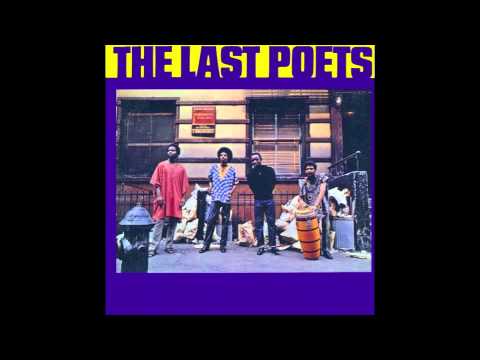


New Black Daddy Diary: Reflection 1
Welcome to my New Black Daddy Diary. Here I reflect on my meditations on the morning of my sons birth. https://youtu.be/HLprLQX3Dms
I speak on trying to prepare the environment, the awe inspiring journey of a woman, and the first thing I told my son when he was born.
Watch All Reflections: https://www.youtube.com/watch?v=HLprLQX3Dms&list=PL-gMpPbGvuj1ydTRKKF4qTSeEhYz6zp8o
...........................
Subscribe: https://www.youtube.com/shakar....aspeaks/?sub_confirm
https://twitter.com/ShakaRaSpeaks
Facebook: https://www.facebook.com/ShakaRaSpeaks/
Instagram: https://www.instagram.com/shakaraspeaks/


Let’s reclaim our food sovereignty and transform the industrial food system! African organisations, including the African Centre for Biodiversity, participating in the Autonomous people's response to the UN Food Systems Summit (UNFSS), coordinated this event, as part of the three days of global mobilisation, which took place during the UNFSS pre-summit, from 25 to 28 July 2021.
We Africans reject the UNFSS, as a continuation of the neocolonial development and agrarian extractivist agenda on our continent. The UNFSS paints African food systems as deficient, and in need of more Western saviour technology, productivity and competitive enhancement. Yet this will only serve to further weaken systems already eroded by decades of state neglect and economic subordination.
Strengthening African food systems, and food producers needs to be grounded in human rights, biodiversity and broader socio-ecological wellbeing. This event brings together small-scale food producers, agricultural workers and vulnerable consumers, to launch the African common position and collectively voice our priorities and solutions for the continent’s food systems and ecologies. Together, we can begin to outline a people’s pan-African vision for food system transformation, from the ground up.
Featured:
Moderators: Mariam Mayet, African Centre for Biodiversity (ACB) and
Mateus Santos, La Via Campesina (LVC)
Presentation of the common position:
Introduction to the vision: Mateus Santos
The vision we defend: Mariam Mayet
What we denounce: Elizabeth Mpofu, Zimbabwe Small Holder Organic Farmers' Forum (ZIMSOFF)/ LVC
What we call for (FR): Dieudonné Pakodtogo, Réseau des Organisations Paysannes et de Producteurs de l'Afrique de l'Ouest (ROPPA)
Voices from the Ground:
Youth and women: Nzira Deus, World March of Women
Fisherfolk: Christiana Saiti Louwa, World Forum of Fisher Peoples
Small-scale family farmers / Peasants: David Otieno, Kenyan Peasant League
Urban food insecure: Samuel Ikua, Habitat International Coalition (HIC)
Indigenous people: Ali Aii Shatu, Indigenous Peoples of Africa Co-ordinating Committee
Agricultural workers (FR): Mohamed Hakech, Fédération Nationale Du Secteur Agricole (FNSA/MAROC)
Closing performance: “Tell the children”, a poem by South African Poet Khadija Tracey Heeger
You can read the declaration (and please sign your organisations on to endorse it) here: https://docs.google.com/docume....nt/d/e/2PACX-1vTVDdM
To find out more about this event, click here: https://www.acbio.org.za/africa-responds-unfss
Follow the social media conversation: #FoodSystems4People
For more information on the counter mobilisation, please click here: https://www.foodsystems4people.org/

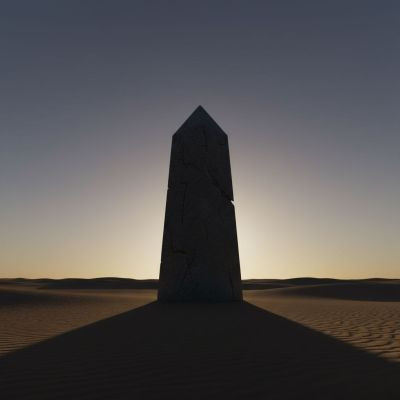


Between 1885 and 1908, the Belgian King Leopold II personally ruled the Congo Free State, which was also known as the Independent State of the Congo.
Because he ruled the state personally, he had total control of its resources and had to answer to no one.
Become a Simple History member: https://www.youtube.com/simplehistory/join
Support us on Patreon: https://www.patreon.com/simplehistory
Copyright: DO NOT translate and re-upload our content on Youtube or other social media.
SIMPLE HISTORY MERCHANDISE
Get the Simple History books on Amazon:
https://www.amazon.com/Daniel-....Turner-%60/e/B00H5TY
T-Shirts
https://teespring.com/stores/s....imple-history-offici
Simple history gives you the facts, simple!
See the book collection here:
Amazon USA
http://www.amazon.com/Daniel-Turner/e/B00H5TYLAE/
Amazon UK
http://www.amazon.co.uk/Daniel....-Turner/e/B00H5TYLAE
https://www.facebook.com/Simpl....e-History-5494376751
https://twitter.com/SimpleHistoryYT
Credit:
Created by Daniel Turner
Narrator:
Chris Kane
https://vocalforge.com/
Music Credit:
Arid Foothills - The Dark Contenent by Kevin MacLeod is licensed under a Creative Commons Attribution licence (https://creativecommons.org/licenses/by/4.0/)
Source: http://incompetech.com/music/r....oyalty-free/index.ht
Artist: http://incompetech.com/
Sources:
Palmer, R.R. Joel Colton and Lloyd Kramer, A History of Europe in the Modern World. New York: McGraw-Hill Education, 2014.
Robinson, James L. “November 15, 1908. Belgium Confiscates Congo Free State from King Leopold II.” In Great Events from History, eds. Carl Bankston Pasadena. Calif: Salem Press, 2009.
Rutz, Michael A. King Leopold’s Congo and the “Scramble for Africa” (Hackett Publishing Company, Incorporated, 2018.
Spaas, Lieve. “Leopold II.” In A Historical Companion to Postcolonial Literatures: Continental Europe and Its Empires, eds. Prem Poddar, Rajeev S. Patke and Lars Jensen. Edinburg: Edinburg University Press, 2011.
Hochschild, Adam King Leopold's Ghost: A Story of Greed, Terror, and Heroism in Colonial Africa. Pan Macmillan, 1998.
King Leopold's Ghost: A Story of Greed, Terror and Heroism in Colonial Africa
By Adam Hochschild
Belgium and the Congo, 1885–1980
By Guy Vanthemsche
Encyclopedia of Africa, Volume 1
edited by Anthony Appiah, Henry Louis Gates (Jr.)