







- General Videos
- Music
- Economics
- Health
- Travel & Events
- History
- Psychology
- Spirituality
- Movies
- News & Politics
- Kmtyw Combat Sciences
- Ɔbenfo Ọbádélé Kambon Videos
- Ɔbenfoɔ Kamau Kambon: Black Liberation Philosophy
- Science, Tech, Engineering and Math
- Permaculture
- Self-Sustainability
- Living Off Grid
- Yoruba Language Learning
- Education
- Mmɔfra Adesua
- Nana Kamau Kambon Playlist
- Livestream
- Komplementarity Kouples and Revolutionary Singles
- Abibitumi Film Series
- Decade of Our Repatriation
- Kwento xpr
- Live
Top videos


Exuding a sheer spirit of Jealous and envy driven by disbelief Some scholars and their students now try to portray to all others that the origins of ancient Egypt is shrouded in mystery. This diabolical and deceptive. Egypt in Africa. There was no Middle east at all.….
They add that Ancient Egyptian culture and religious writings seemed to spring up overnight. Using this ploy, the deceivers with unbridled pretense and outright lies create an Egypt totally separate from its more ancient powerful kingdom to the south.
It is these manufacture dishonesties spiced with fake statues, selective DNA from Greek Roman mummies and prejudiced literature now used to promote the idea that Egypt is a Mediterranean or Asian Civilisation not Afrikan! In this view therefore the Most powerful kingdom south of Egypt must be buried, ignored and not taught! However New findings are changing tall this. Millions are now rediscovering another ancient civilization which predates the civilizations of Egypt and Mesopotamia. A civilization which was until very recently, entirely unknown
There is an abundance of rock art found all over the central Sahara from Libya to Egypt to Mali. The rock art depicts elephants, crocodiles, dogs, hippos and rhinos - animals who do not live in the desert. Scenes of hunting and rituals are shown, with men wearing animal masks. There are representations in rock art of dog-headed human figures which resemble Anubis, and a type of stamped pottery decoration later found in the southern Nile valley. Kingdom_of_Kush-map/Interesting-facts-about-ancient-Egypt
Are Nubians Africans? The answer to this is not easy But we have given it our best short. Find out if it makes any sense but it surely is educative and empowering. This question creates confusion But is informative.
Subscribe Share and Comment.
References
https://www.tellerreport.com/n....ews/--why-did-the-nu
EgyptSearch Forums: The Nubians of Egypt consider it an insult if you call them Sudanese.They’re Egyptian
Sudan Divided Identity, Divided Land P1.mkv
Sudan Divided Identity, Divided Land P2.mkv
Sudan Divided Identity, Divided Land P3.mkv
(1) There Is No Middle East - YouTube
Africa Afrika (tumblr.com)
NUBA PEOPLE: AFRICA`S ANCIENT PEOPLE OF SOUTH SUDAN (kwekudee-tripdownmemorylane.blogspot.com)
Ancient Egypt (teacheroz.com)
Africa was Kush/Ethiopia!
History Wiped Out. The Dinka Nubians Connection From Central Sudanic Are The First Ancient Egyptians (cityscrollz.com)
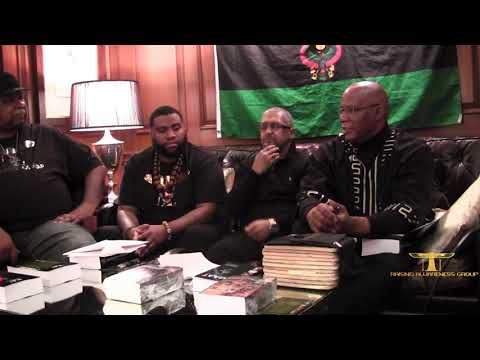

The Raising Awareness Group interviews and discuss with Dr. Tdka Kilimanjaro his new ground breaking book KA² and the long road that he and the rest of his UKMT Press Team had to travel in order to produce their much heralded catalogue of historical works.
Khufu Akhu Mentuhotep, sbA Olatunji Mwamba and Elder Mkuu Mzee cover a wide range of topics and issues with Dr. Kilimanjaro that effect the African Community from a global perspective.
KA²: Philosophy and Method culminates 33 years of research and praxis in the area of philosophy, theory and methods. There are moments when enough has been analyzed and criticized, and it is time to just clear the intellectual ground of the debris of ages. There are moments when a careful tending of the first beginning of the new, which is growing among the ruins of the old on a soil still badly filled with trash, is more important. This is such a period.
KA²: Philosophy and Method offers in a single book a compendium of ancient and modern enlightenment wisdom on change, strife of opposites and transformation. Our task was to advance this ancient philosophical system (and its many adaptations overtime), to the level of an applied method. Why do you need a central organizing philosophy? Instead of continually stumbling around haphazardly, losing, not knowing with certainty what has happened are what will happen we needed to create and/or unearth and advance ancient philosophy and methodology that guaranteed modern theoretical clarity. Essentially, KA² is a return to the substance and source of ancient African philosophy by recovering the rational kernel of Africa’s ancient scientific and spiritual and ethical traditions and putting it to paper. In so doing, this book serves as a bridge, a portal, a medium for transmitting the transcendental wisdom of our ancestors across centuries.
Some will ask: “Why put so much time and effort to unearth and modernize this ancient science of ideas?” We study the past not merely to feel good about what we did, but to master the lessons of how we did things. Today, most are immune to human suffering, instead finding it acceptable to replace work with a prayer and claims of spirit saving us---as if spirit is not matter or expressed in some material form and activity, i.e., potential then kinetic energy. We must have works along with the faith or prayers or meditation. Keeping alive the tradition of putting knowledge at the service of all members of the community, emancipatory knowledge, material culture, intermediaries affected, a life at the service of a cause: emancipate the continent from the cycles of defeat we offer KA² to another generation.
Purchase UKMT Press books here:
https://www.facebook.com/pg/UK....MT-PRESS-25920058445
Visit our website for interesting and thought provoking educational articles. We cover a wide spectrum of issues across the Diaspora.
www.RaisingAwarenessGroup.com
Have a question or comment? Reach us at:
RaisingAwarenessGrp@gmail.com
Abibifahodie
Shm m htp


My dream has always been to interview Wode Maya, his resilience , discipline and consistency is something I totally admire and to finally sit with him on this episode was fulfilling
An aeronautical engineer by profession , raised in the village to becoming Africa’s biggest content creator
Here is Wode Maya’s untold story
Join the Lynn Ngugi Club to access special content and supporter perks 🥰
https://www.youtube.com/channe....l/UCa2gldA2ivhzMwIJR


This is a previously undiscovered African house, from east Kenya,. It is almost on the edge of extinction, with the tradition being preserved by one remarkable young woman, Ramadan. The tiny home, a beautiful example of organic architecture, is constructed by around twenty women builders over three days, usually just before a marriage. The house is unusually high, with a raised up bed, and this is to protect the occupants from the occasional flooding of the river Tana. All the natural materials are gathered from within a few kilometers of the village. Essentially it is a bentwood frame lashed together into a gridshell. The whole structure is strong as it is a natural parabolic dome. The area is undergoing rapid change as modern materials and electricity are being brought in, so we were very fortunate to be able to record this building before it disappears completely.
COMPETITION: We tried to count how many knots were actually used in making the building. We have a small competition. The person who is closest to our answer, within three months of the video uploading will receive one of the very last copies of my book, free of charge. Leave a comment with your number, and how you estimated it (even if it is just a random guess). As long as we can then contact you to get your address we will send you a book all about nomadic architecture. There are only about 20 left unsold and this will never again be printed.
FUNDRAISER: This high building has evolved out of a very lightweight and mobile architecture that the same tribe use in the semi-desert regions to the north. We need to raise $5,000 to return to make a full record of this building type. We are open to sponsorships, or would even take a guest with us if you will cover the costs, fancy a trip of a lifetime working on a really important research project?
You can support us via Patreon or make a donation direct through Paypal, or contact us directly if you want to discuss another way to support us - (email address is on our channel page).
https://www.patreon.com/Nomad_Architecture
https://paypal.me/NomadicArchitecture
https://nomads.org/Books.html
MUSIC: I write all the music for our more recent videos. If you like it let me know, I know it is not perfect, but I enjoy it!


#TheNewBlackMind
► Subscribe to Transatlantic Productions 💥Smash The LIKE Button👍🏿 Share↗️ & hit the Notifications Bell 🔔
► Donate so we can complete the upload https://www.gofundme.com/tapvideo
► Cash App: $Tapvideo $Moneymark0730 $BrotherRonn $LadySapphire5D
► Share on video on all Social Media.
► Website https://tapvideo.blogspot.com
https://www.facebook.com/Tapvi....deocom-7441435789873
► Back up Channels:
https://www.youtube.com/channe....l/UCs9-wRHfFb7v7RQAi
https://www.youtube.com/user/savejamaica


The Igbo Lesson for today is a centered around 3 main words - Ball, New and Play . The Title of the Story is Chuka nwere okpole - Chuka has a ball.
The words are colour coded so that you can follow and learn the Igbo words with its English translation. As with other Learn Igbo videos, you are encouraged to follow along and pronounce the words as I say them. Practice makes perfect.
At Learn Igbo Now, my mission is to create fun materials to help you learn Igbo language and culture. These include tutorial videos, books, audio, learning aids like posters, workbooks and downloadable worksheets.
If you like this video, like it 👍🏾 and subscribe to my channel :
https://www.youtube.com/user/l....earnigbo?sub_confirm
If you have any comments to make about this video, do let me know in the comments section below.
FREE Welcome Pack - Digital Igbo Learners' Pack
Get these for free! An Igbo Colouring book for adults, Full colour Igbo learning Posters, finger tracing Igbo alphabet cards, and 6 simple reader Storybooks in Igbo and English.
https://www.learnigbonow.com/Igbotic-newsletter
My Igbo books on Amazon
https://amzn.to/3afF2WG
Igbo Inspired T shirts, Hoodies and more
https://www.igboswag.com/
#igboclass #learnigbo #igbolanguage


In this stunning 360° video, former U.S. inmate Rickey Jackson, who was wrongfully imprisoned for 40 years (including being on death row and in solitary), tells the story of his rebirth. At the time of his release, Jackson served the longest sentence of any exonerated U.S. inmate. Read more: https://www.theatlantic.com/vi....deo/index/577639/sen
Use the arrows on the top left of the video window to watch from any angle, or just click and drag in any direction.
"Send Me Home" was directed by Cassandra Evanisko and produced by Lonelyleap. It is part of The Atlantic Selects, an online showcase of short documentaries from independent creators, curated by The Atlantic.
Subscribe to The Atlantic on YouTube: http://bit.ly/subAtlanticYT
![Faces Of Africa - Sankara's Ghost [2015]](https://i.ytimg.com/vi/cobVBgQKdlc/hqdefault.jpg)