







- General Videos
- Music
- Economics
- Health
- Travel & Events
- History
- Psychology
- Spirituality
- Movies
- News & Politics
- Kmtyw Combat Sciences
- Ɔbenfo Ọbádélé Kambon Videos
- Ɔbenfoɔ Kamau Kambon: Black Liberation Philosophy
- Science, Tech, Engineering and Math
- Permaculture
- Self-Sustainability
- Living Off Grid
- Yoruba Language Learning
- Education
- Mmɔfra Adesua
- Nana Kamau Kambon Playlist
- Livestream
- Komplementarity Kouples and Revolutionary Singles
- Abibitumi Film Series
- Decade of Our Repatriation
- Kwento xpr
- Live
Top videos
![Eritrea, 'The Forgotten War' - Swedish Documentary [1980]](https://i.ytimg.com/vi/Q9vGGq6LgBw/hqdefault.jpg)

![Every Rain Drop Counts: Water Harvesting - Uganda [2014]](https://i.ytimg.com/vi/vA4nhcDXYmU/hqdefault.jpg)


Get your copy of my new book here: https://kevindorival.com/produ....ct/the-winner-in-the
The #WinnerInTheMirror - Activating Your Superpowers: Mind, Body, and Spirit by #KingKevinDorival.
Book Release: Spring 2021. Thanks to everyone that supported me from day one with my first 2 books! The Courage To Believe and 7 Types of Queens, Kings Desire! Stay blessed and encouraged - no matter what. For bookings: info@kevindorival.com #Inspirational


‼️WATCH THE FULL UNCENSORED INTERVIEW WITH 'DALE ELLIOTT JR'' NOW‼️
https://ineverknewtv.com/premium/
Dale Elliott Jr. is a Jamaican-born actor, comedian, and content creator celebrated for his captivating humor and authentic storytelling.
In Part 2 of this powerful reasoning, Dale Elliott Jr. breaks down how (envy, jealousy, bad mind) can quietly creep into your mind and destroy your life—often without you even realizing it.
➡️ Please check out Dale Elliott's Youtube channel 'Dale Elliott Tv':
https://www.youtube.com/@DaleElliottTV
➡️ Tune into 'I NEVER KNEW 📻'
🇲🇱Roots, Rock, Reggae Music🇲🇱
Hosted By : Jr of 'I Never Knew Tv'
https://www.WLOY.org
Sunday 9 -11 AM EST
Wednesday 8- 10 AM EST
Thursday 10- Noon AM EST
#jealousy #ineverknewtv

STEAM PROGRAM FOR BLACK CHILDREN https://consciousingenuity.com/MANHOOD TRAINING CAMP FOR BLACK BOYShttp://asafocamp.com/THE MELTREK PROGRAM https://edanimeproductions.com/shopBEST ONLINE SCHOOL FOR BLACK CHILDREN https://www.uhuruacademy.com/ EMAIL ME:dr.maat.msu@gmail.com

Join this channel to get access to perks and support my work (inscrivez-vous à ma chaîne pour avoir accès à des avantages et soutenir mon travail):
https://www.youtube.com/channe....l/UCmTAGy0K1iQHi9Gjt
+++++++++++++++++
I Created a deck celebrating natural hair that you can find here:
J'ai créer un jeu qui célèbre les cheveux naturels et vous pouvez le trouver ici:
https://gum.co/naturalhaircards
+++++++++++++++++++++++++++++++++++++++++
My courses - Mes cours:
Sacred Spaces: Everything your need to get started in evaluating, modifying and directing the energy in your space
EN: https://gumroad.com/l/sacredspaceEN
Espace Sacré: Tous ce dont vous avez besoin pour commencer à comprendre l'énergie qui se trouve chez vous
FR: https://gumroad.com/l/rUqZw
Sacred Cycle: 8 sessions to walk you through tools that will enable you to better understand your cycle
EN: https://gum.co/hlmqq
Cycle Sacré: 8 Sessions qui vont vous amener à redécouvrir votre cycle et le vivre pleinement
FR: https://gum.co/deuD
*********Contact for business-related inquiries ONLY / Uniquement pour les affaires ***********
To work with me, book a consultation or for all other business inquiries ONLY please contact me at MlleCammy@gmail.com
Pour travailler avec moi, faire des collaborations, avoir une consultation ou tout autre question d'affaire SEULEMENT vous pouvez m'écrire ici: MlleCammy@gmail.com
**************************************************************
Much love and thank you for watching!
Bisous et merci pour votre soutien :)
#MakedaWisdom #Maat #AfricanSpirituality



I Bought A Cow from Mundari Tribe & Fed The Orphanage In South Sudan!
The Image of Africa has been distorted around the globe and we are changing the narratives via Youtube videos One Country At Time.Until the history of Africa is told by Africans, the story of greatness will always glorify the imperialists.!It's Time For Africans To Unite, Embrace their Culture and be Proud of their Roots & Tell Their Own Story!-AFRICA TO THE WORLD..Subscribe to unlocked the Real Africa!
Looking for a Short stay place in Ghana?
Book With
https://www.instagram.com/wood....buryluxuryapartments
One On One Consultation With WODEMAYA
https://aiyawodemaya.com/consultation/
We Need Your Support To Make This Project A Successful One
For Sponsorship Advertisement & Business Enquiries
hello@mayaempiregroup.com
Donate & Support the Channel on Patreon:
https://www.patreon.com/wode_maya
Purchase Our T-Shirt To Support Our Journey!
https://teespring.com/proudly-africa
https://teespring.com/wodemaya-africa-to-the-world
https://teespring.com/maya-africa-to-the-world
https://teespring.com/born-afr....ican-in-america-blac
Let's Interract On:
Twitter
https://twitter.com/wode_maya
Instagram:
https://www.instagram.com/mrghanababy/
Like My Facebook page:
https://www.facebook.com/Wodemaya99/
I LOVE YOU


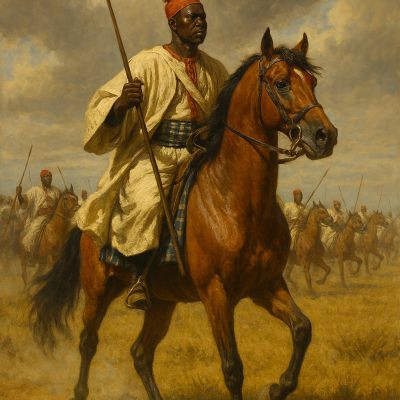




Label: Sunny Alade – SALPS 3
Format: Vinyl, LP
Country: UK
Released: 1975
Genre: Funk / Soul, Folk, World, & Country
Style: Highlife, Afrobeat, Soukous, African
You can always visit our website : https://www.afrosunny.com/ for more African music.
Tracklist
A1 Moti Mo 00:00 (Medley)
A2 Pala Syncro
A3 Ota Nlulu Ibaje
A4 Mawobe
A5 Eti Won Aya
B1 Kileni Ase 19:10 (Medley)
B2 Mori Sisi Meji
B3 Iduro Soro
B4 Bi Oba Fe Sebi Ranti
B5 Kowo Kowo
B6 Didun Londun
Album has been found on Globalgroovers website.
* All materials presented on this channel are copyrighted by their respective copyright owners, and are subject to use for INFORMATIONAL PURPOSES ONLY! SUPPORT THE MUSICIANS, BUY THEIR MUSIC!** If you (being a musician or a copyright owner) don't approve your music material to be presented on this channel (or would like any additional info to be published), please contact me (via my Youtube channel ) and I'll remove it in seconds (or add necessary info)! Thank you in advance for your understanding!