





- General Videos
- Music
- Economics
- Health
- Travel & Events
- History
- Psychology
- Spirituality
- Movies
- News & Politics
- Kmtyw Combat Sciences
- Ɔbenfo Ọbádélé Kambon Videos
- Ɔbenfoɔ Kamau Kambon: Black Liberation Philosophy
- Science, Tech, Engineering and Math
- Permaculture
- Self-Sustainability
- Living Off Grid
- Yoruba Language Learning
- Education
- Mmɔfra Adesua
- Nana Kamau Kambon Playlist
- Livestream
- Komplementarity Kouples and Revolutionary Singles
- Abibitumi Film Series
- Decade of Our Repatriation
- Kwento xpr
- Live
Top videos


‼️WATCH THE FULL UNCENSORED INTERVIEW WITH 'PAULA HURLOCK'' NOW‼️
https://ineverknewtv.com/premium/
Paula Hurlock is a Jamaican mental health and wellness advocate.
In Part 1 of her reasoning, Hurlock speaks on the sacred practice of rest and relaxation. She explores how the historical experiences of Black people worldwide, combined with today’s hustle culture, have fostered an environment where the true value of rest is often misunderstood.
Please click link below to learn more about Paula Hurlock and his work:
https://paulahurlock.com
➡️ Tune into 'I NEVER KNEW 📻'
🇲🇱Roots, Rock, Reggae Music🇲🇱
Hosted By : Jr of 'I Never Knew Tv'
https://www.WLOY.org
Sunday 9 -11 AM EST
Wednesday 8- 10 AM EST
Thursday 10- Noon AM EST
#rest #ineverknewtv


#drmaat #truthtopower #batushakari #juneteenth #emancipation #slavery #ushistory #blackpsychology #blackhistory #americanhistory #slavery #blackpeople #hometeamhistory
INTRO/OUT SONG
"Truth to Power"- by The Paradigm Shift (Amadaye The Apostle & Genesys Dayz)
Here is the link to the full song: https://www.reverbnation.com/amadayetheapostle/song/32112869-truth-to-power?fb_og_action=reverbnation_fb:unknown&fb_og_object=reverbnation_fb:song&player_client_id=j29dsi7kl&utm_campaign=a_public_songs&utm_content=reverbnation_fb:song&utm_medium=facebook_og&utm_source=reverbnation_fb:unknown
GET EDUCATIONAL PRODUCTS FOR YOUR CHILDREN HERE:
https://edanimeproductions.com/shop
CONNECT WITH ME ON FACEBOOK: https://facebook.com/droyaadwoamaat
EMAIL ME:
dr.maat.msu@gmail.com



children away from their Fathers.
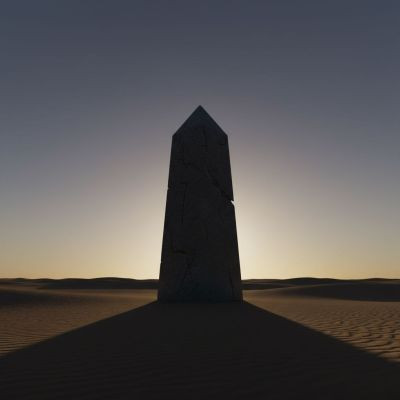
‘For Mothers who won't let Fathers see their Children,’ is an all-women’s response to Mothers as well as court systems directly affecting Father’s visitation rights and direct positive relationships with their children. Women will discuss and examine women’s role in the matter or the role they have experienced with other women to take part in this matter. More so to make a positive argument and narrative regarding the importance of having the father or man in the household and directly in the child’s life in any capacity. Women will be the primary voices in the discussion and discourse regarding this topic.
Nware Rahsaan Burge is currently a PhD candidate, an Adjunct Professor at Kean University in Union, New Jersey; Essex County College, in Newark, New Jersey; and Medgar Evers College in Brooklyn, New York. Nware is also a History and Special Education High School teacher and an Award-Winning Independent Documentary filmmaker. Nware holds a Bachelor’s degree in Liberal Arts/Political Science from Medgar Evers College in Brooklyn, New York, a Master’s degree in Education from Brooklyn College, in Brooklyn, New York and is a PhD candidate in Humanities and Culture at Union Institute and University in Cincinnati, Ohio. Nware has taught and worked in urban public schools for more than 17 years and as a University Professor for 4 years.
Nware was born in Hackensack, New Jersey and raised in Newark, New Jersey. He lived in Brooklyn, New York for 15 years, as well as Philadelphia for 3 Years, and currently resides in his hometown of Newark, New Jersey. As a first-time filmmaker and director, Nware has created his first feature documentary film, which is in its final editing stage, entitled: DNA-Using Genealogy to Change My SLAVE Last Name. The premise of the film poses the complex and sensitive question, “Should Black people change their White last name?” The film features Dr. Gina Paige of AfricanAncestry.Com as well as New York State Senator Kevin Parker, Historian and Scholar Dr. Leonard Jeffries and other scholars who give their insight on the topic. This complex and sensitive subject matter that his documentary film is based, has qualified Nware’s film to win the Yaa Asante Waa award for Best Documentary at the Black Star International Film Festival in Accra, Ghana.
Nware Burge’s film, DNA-Using Genealogy to Change My Slave Last Name, proposes the idea that people of African descent in the Americas, specifically African Americans and Caribbean’s alike, should contemplate the idea of using DNA genealogy results to change their European surname to the name of their genetic African ethnic origin. Nware plans to use his results from his DNA genealogy test to decide on a new surname, as well as applying for dual citizenship, which he urges other African Americans to consider as possibilities.
Another aim of his documentary DNA is to enlighten others and bring to the forefront that people of African descent in the Americas have carried and passed on the legacy of chattel slavery, imperialism, and colonization, as they continue to pass on their slave master’s European surname, from generation to generation without much grievance. The film reflects love, cultural pride, and the perplexity regarding his family surname of BURGE. Nware’s film DNA, also addresses the importance of people of African descent reclaiming their cultural and original mores, norms and spiritual systems from West Africa that were lost due to the Trans-Atlantic Slave Trade.
Nware will be releasing his totally independent documentary film titled: For Mothers who won’t let Fathers see their Children (An All-Women’s Narrative), this Father’s Day, Sunday, June 16th, 2024, in which he attends to shedding light and understanding concerning general issues of Black fathers being separated from their children through a legacy of systematic governmental politics as well as the volition of mothers through parental alienation.
Nware is also in pre-production of his independent film titled: BLACK BEACHES in America – Our Maroon Societies. A film which will be centered around educating and sharing the great stories about some of the iconic Black Beaches in America that many people, never knew existed.
Overall, Nware understands the importance of history and culture as it applies to people of direct African descent and indigenous people across the world and hopes that all are inspired after viewing his films.
FOR MOTHERS WHO WON’T LET FATHERS SEE THEIR CHILDREN LINKS
TRAILER: https://filmfreeway.com/projects/3178881
PURCHASE FILM: https://nwarefilms.vhx.tv/
NEWLY RELEASED ARTICLE ON THE DOCUMENTARY FILM: https://face2faceafrica.com/ar....ticle/i-have-not-see




This video highlights 10 major farming decisions to make based on weather information.
Watch the Swahili version in the link below:
https://youtu.be/mcMBfrXWN2o
Video credits:
USDA, USAID, IITA, World Agroforestry, FAO.
If you're new, please subscribe!
Visit us → https://iita.org/
Like us → https://facebook.com/IITA.CGIAR
Follow us → https://twitter.com/iita_cgiar
Follow us → https://instagram.com/iita_cgiar/
Get all our latest news → http://bulletin.iita.org/
#farming #weather #Agriculture




The second guest we have with us for 'Africanus Talks' is Sarah Agnela Nyaoke Ouma. Nyaoke is a Ja-Luo born in East Africa who is undertaking a post as a PHD researcher in the Seafarers International Research Centre, Cardiff. She gives us an insight into what it was like growing up as a Luo during the rise of the multiparty political system in Kenya, which was nurtured by her father, the late great Professor Ouma Muga.
Join us each Saturday for new content from 'Africanus World'
Website - www.Africanusworld.com
Pateron - https://www.patreon.com/AfricanusWorld
Facebook - https://www.facebook.com/AfricanusWorld/
Twitter - https://twitter.com/AfricanusWorld
Instagram - https://www.instagram.com/africanuswo...
Pay Pal - https://www.paypal.com/cgi-bin/webscr...


Burkina Faso is a special country; one that is characterized not by its economy or its nature, but by the people that inhabit it. Diversity is unequivocally Burkina Faso’s strong suite as difference takes place in co-existence. What makes this interesting for an architect is that the large variety of ethnic groups is paired with the creativity portrayed in the spatial environment.
Understanding the natural, cultural and social context in which Burkinabé citizens live will provide us with the tools to design better, more affordable and more culturally sensitive housing solutions. Comprehending their daily life is of high importance if the urbanizing population is to accept, apply, use and create new, more effective housing typologies.
This documentary shows the strength local architecture has and the inevitable change that the country is facing. Fusing both the vernacular and an African modernity offers viable solutions to the spatial development of the country’s urban growth.
I hope you enjoy it!
Check https://www.robynesome.com/bur....kinab-domesticity-do for the research paper, which contextualizes global challenges such as high population growth, rapid urbanization, and the lack of cultural values portrayed in mass housing, within Burkina Faso.