





- General Videos
- Music
- Economics
- Health
- Travel & Events
- History
- Psychology
- Spirituality
- Movies
- News & Politics
- Kmtyw Combat Sciences
- Ɔbenfo Ọbádélé Kambon Videos
- Ɔbenfoɔ Kamau Kambon: Black Liberation Philosophy
- Science, Tech, Engineering and Math
- Permaculture
- Self-Sustainability
- Living Off Grid
- Yoruba Language Learning
- Education
- Mmɔfra Adesua
- Nana Kamau Kambon Playlist
- Livestream
- Komplementarity Kouples and Revolutionary Singles
- Abibitumi Film Series
- Decade of Our Repatriation
- Kwento xpr
- Live
Top videos


Corrupted Afrikan Leadership!
Art of Leadership book can be purchased in these apps:
Cashapp: $pjh6867
Zelle: pjh6867@gmail.com
Paypal: https://paypal.me/MkuuMzee?country.x=…
UKMT PRESS: https://universityofkmt.myshopify.com/
Inbox or email me your address before or after payment. $30 + $5 s/h
Htp
Abibifahodie!


Four years after stepping up as a 34-year-old army captain to rescue a nation on the brink, Ibrahim Traore has fundamentally transformed Burkina Faso. Marking his milestone fourth anniversary—a tenure echoing the legendary leadership and anti-imperialist defiance of Thomas Sankara—Traore has systematically dismantled neocolonial dependencies, expelled foreign troops, and forged the Alliance of Sahel States to secure true regional sovereignty. Moving far beyond political rhetoric, Traore’s vision is actively reshaping Burkina Faso's economy from the ground up. By inaugurating the country’s first state-owned gold refinery, rolling out massive domestic textile complexes to process local cotton, and manufacturing home-grown defence fleet vehicles, his government is ensuring that national wealth stays firmly in African hands. While facing ongoing security challenges from extremist insurgencies and firmly rejecting external pressures over democratic timelines, Traore has proven to the world that a sovereign, self-reliant revolution is not just a dream of the past—it is happening right now. Alyson Le Grange brings you more on this story on Firstpost Africa.
---
Ibrahim Traore | Burkina Faso | Ibrahim Traore Burkina Faso | Burkina Faso President | Burkina Faso Coup | Ibrahim Traore Revolution | Thomas Sankara | Thomas Sankara Legacy | Burkina Faso Sovereignty | Anti Imperialism Africa | Sahel Alliance | Alliance Of Sahel States | Firstpost Africa | Alyson Le Grange | Africa | Firstpost
#ibrahimtraoré #burkinafaso #thomassankara #sahel #allianceofsahelstates #aes #africanews #firstpostafrica #africa #alysonlegrange #firstpost
firstpost is an Indian news and media website. Get all the incisive opinions, in-depth analyses and other visual stories that matter to you and the world right here on this channel.
Subscribe to Firstpost channel and press the bell icon to get notified when we go live.
https://www.youtube.com/@Firstpost
Follow Firstpost on Website:
https://www.firstpost.com
Follow Firstpost on Instagram:
https://www.instagram.com/firstpost/
Follow Firstpost on Facebook:
https://www.facebook.com/firstpostin/
Follow Firstpost on X:
https://twitter.com/firstpost
Follow Firstpost on WhatsApp:
https://www.whatsapp.com/chann....el/0029Va6zOIrEQIams

In Senegal, traditional wrestling has its roots in the culture and community of rural villages, particularly among the Serer people.
What began as tribal preparations for battle developed into village ritual and soon a form of entertainment. Men traditionally fought at village festivals after the harvest season as a way of attracting women, proving their virility and bringing honour to their communities.
But in the past 50 years, traditional Senegalese wrestling has grown exponentially to become a major national sport for both men and women - with celebrity fighters competing for big prize money, in large stadia and in front of thousands of fans.
"We can say that it is not just a sport," says sociologist Aly Tandian. "It has always been a socially stimulating factor in the Senegalese society."
"Today, there are villages that have become well known in all of Senegal because they have given birth to great wrestlers," he adds.
Today, the professional wrestlers at major events - like "Bombardier" and Eumeu Sene - are household names, winning over $80,000 a fight.
Up-and-coming fighters like "Lacrymogene", who we meet in this film, win more modest sums - from a few to a few hundred dollars. But the winnings mean that for some of the poorest Senegalese, wrestling can genuinely represent a means of clawing their way out of poverty.
Traditional wrestling is part of a wider phenomenon of combat sports in West Africa, including in countries like Gambia, Guinea and Gabon. In Senegal, the sport has attracted both genders, with the women's game now popular and well respected in its own right.
Olympic fighter Isabelle Sambou has won the African Championships nine times. Safiato Biola has competed in women's events in Europe and North Africa, and Anta Sambou says winning three golds at the 2017 Francophone Games has built her confidence and transformed her life.
"Wrestling is part of our culture," says Isabelle.
"If you wrestle when you're young, you can wrestle through your whole childhood, and as an adult you can still wrestle. Especially the girls, don't be afraid of a wrestler."
"I love my achievements so much that it has made me stronger," she says. "I also represent a force in my village, and that has made me reach the top."
In this film, we explore the popularity of traditional wrestling among Senegalese fighters and fans alike, men and women, urban and rural - from small village festivals to arena events in the capital, Dakar.
We look at wrestling as an expression of pride and cultural identity but also to show how sport - at even the lowest levels - can mean the difference for some between modest, local success and a miserable existence on the margins of society.
As Tandian says, "There are certain places, like the suburbs of Dakar, where young people only have two options: wrestling or leaving the country."
Connect with Al Jazeera World:
‣ YouTube: https://aje.me/AJWplaylist
‣ Twitter: https://twitter.com/AlJazeeraWorld
‣ Facebook: https://www.facebook.com/AlJazeeraWorld
‣ Instagram: https://www.instagram.com/_aljazeeraw...
‣ Website: https://www.aljazeera.com/program/al-...
#aljazeeraworld #documentary #history


#TheNewBlackMind
► Subscribe to Transatlantic Productions 💥Smash The LIKE Button👍🏿 Share↗️ & hit the Notifications Bell 🔔
► Donate so we can complete the upload https://www.gofundme.com/tapvideo
► Cash App: $Tapvideo $Moneymark0730 $BrotherRonn $LadySapphire5D
► Share on video on all Social Media.
► Website https://tapvideo.blogspot.com
https://www.facebook.com/Tapvi....deocom-7441435789873
► Back up Channels:
https://www.youtube.com/channe....l/UCs9-wRHfFb7v7RQAi
https://www.youtube.com/user/savejamaica


It means when we were kids
The words of the Nubian poet
Mohiuddin Sharif
Singing the ambassador of the Nubian musician
Hamza Alaeddin
And it tells about the nostalgia of the displacement of Nubia in northern Sudan and southern Egypt
A work of art, rewritten by the Sudanese musician Hussam Abdel Salam
And the performance of the artist Hani Abdeen and was filmed on the island of (Defi) in northern Sudan
A tribute to the spirit of the Nubian artist Hamza Aladdin
And they linked the unity of Nubia in the north and south with the Nile, with a single cultural identity
رابط النسخة الاصلية للاغنية
https://www.youtube.com/watch?v=0DZO1i_C7LY
تابعونا علي
فيس بوك
https://www.facebook.com/SUDAN....-layout-403559866762
تويتر
https://twitter.com/SudanLayout
استغرام
https://www.instagram.com/sudanlayout/
Director & Dop
Ibrahem Saihon
2021
#Music
#Nubian
#Sudan
#Africa
#Landscape
#Land
#People
#Displacement
#Nubian civilization


![Stealing from the Sick - Full documentary - BBC Africa Eye [2019]](https://i.ytimg.com/vi/d41_BaVygQI/hqdefault.jpg)
Everyone in Uganda is entitled to free medicine to combat killer diseases like malaria. Despite Government efforts to improve access to essential medicines, a significant number of people have to use private facilities because of frequent stockouts.
BBC Africa Eye headed undercover to expose one of the reasons why there is shortage of life saving drugs – medicine theft by medical professionals.
Africa Eye worked together with the Ugandan investigative journalist, Solomon Serwanjja.
Subscribe: http://bit.ly/subscribetoafrica
Website: https://www.bbc.com/africa
Facebook: https://www.facebook.com/bbcnewsafrica/
Twitter: https://www.twitter.com/bbcafrica/
Instagram: https://www.instagram.com/bbcafrica/
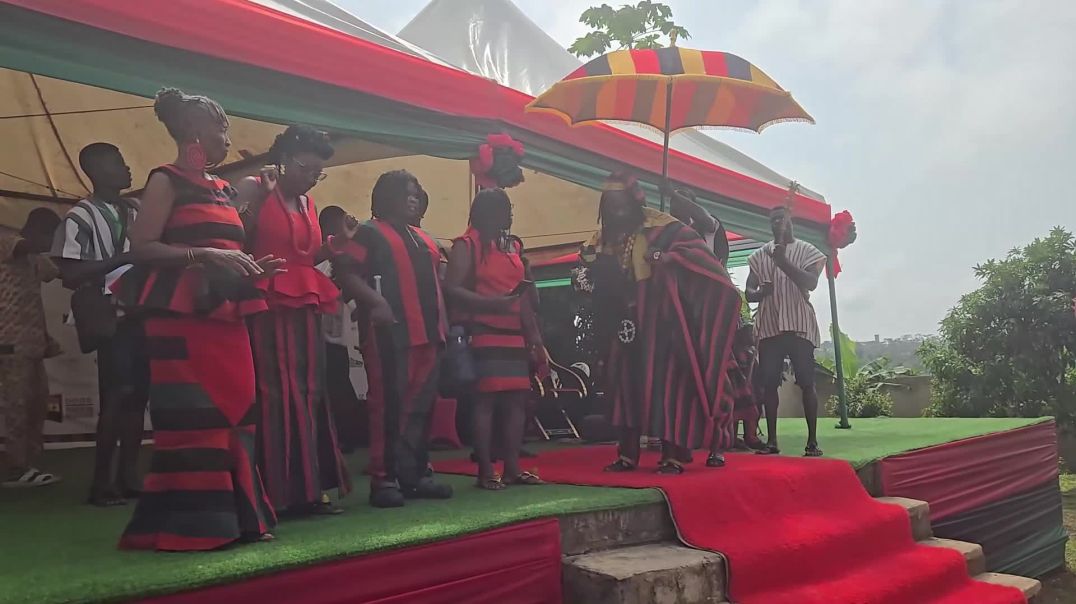
One of many videos from the Sankɔfa Journey - 2025
For more information on joining the next Sankɔfa Journey, check out: https://sankofajourney.com/
For more information about D.O.O.R., check out: https://decadeofourrepatriation.com/
All music can be found here: https://abibinnwom.app/


The Image of Africa has been distorted around the globe and we are changing the narratives via Youtube videos One Country At Time.Until the history of Africa is told by Africans, the story of greatness will always glorify the imperialists.!It's Time For Africans To Unite, Embrace their Culture and be Proud of their Roots & Tell Their Own Story!-AFRICA TO THE WORLD..Subscribe to unlocked the Real Africa!
Looking for a Short stay place in Ghana?
Book With
https://www.instagram.com/wood....buryluxuryapartments
One On One Consultation With WODEMAYA
https://aiyawodemaya.com/consultation/
We Need Your Support To Make This Project A Successful One
For Sponsorship Advertisement & Business Enquiries
hello@mayaempiregroup.com
Donate & Support the Channel on Patreon:
https://www.patreon.com/wode_maya
Purchase Our T-Shirt To Support Our Journey!
https://teespring.com/proudly-africa
https://teespring.com/wodemaya-africa-to-the-world
https://teespring.com/maya-africa-to-the-world
https://teespring.com/born-afr....ican-in-america-blac
Let's Interract On:
Twitter
https://twitter.com/wode_maya
Instagram:
https://www.instagram.com/mrghanababy/
Like My Facebook page:
https://www.facebook.com/Wodemaya99/
I LOVE YOU

1. Zelle: akyeame.kwame@gmail.com
2. Cash App: $obenfoobadele
3. Bitcoin (bc1qtkma7kc8say5rnqtgkrafs65kthqlsan28axf5)
4. MTN Mobile Money (+233247146063)
5. Credit card/paypal using https://www.abibitumi.com/crowdfund
6. Paypal: me@obadelekambon.com


Slave codes were a method of protecting the investment of white enslavers in the Colonies by restricting the lives of enslaved people in almost every imaginable way. The codes restricted enslaved people’s ability to move around, or engage in commerce that could make them financially independent - they restricted the very opportunities that would allow them to live with even relative freedom. Today, we'll learn about how Colonies put laws in place to restrict the movement and freedoms of both enslaved people and free Black people alike.
Watch our videos and review your learning with the Crash Course App!
Download here for Apple Devices: https://apple.co/3d4eyZo
Download here for Android Devices: https://bit.ly/2SrDulJ
Crash Course is on Patreon! You can support us directly by signing up at http://www.patreon.com/crashcourse
Check out Clint's book: https://bookshop.org/books/how....-the-word-is-passed-
Thanks to the following patrons for their generous monthly contributions that help keep Crash Course free for everyone forever:
Alexis B, Rene Duedam, Burt Humburg, Aziz, Nick, DAVID MORTON HUDSON, Perry Joyce, Scott Harrison, Mark & Susan Billian, Junrong Eric Zhu, Alan Bridgeman, Jennifer Smith, Matt Curls, Tim Kwist, Jonathan Zbikowski, Jennifer Killen, Sarah & Nathan Catchings, Brandon Westmoreland, team dorsey, Trevin Beattie, Eric Koslow, Indika Siriwardena, Khaled El Shalakany, Shawn Arnold, Siobhán, Ken Penttinen, Nathan Taylor, William McGraw, Laura Damon, Andrei Krishkevich, Sam Ferguson, Eric Prestemon, Jirat, Brian Thomas Gossett, Wai Jack Sin, Ian Dundore, Jason A Saslow, Justin, Jessica Wode, Mark, Caleb Weeks
__
VIDEO SOURCES
-Ira Berlin, Many Thousands Gone: The First Two Centuries of Slavery in North America (Cambridge: Harvard University Press, 1998).
-John Hope Franklin, From Slavery to Freedom: A History of Negro Americans (New York: Knopf, 1967).
-Claude M. Steele, Whistling Vivaldi: How Stereotypes Affect Us and What We Can Do (Reprint Edition ed. 2011).
-Black Codes and Slave Codes, Colonial, , Oxford African American Studies Center , http://oxfordaasc.com/view/10.....1093/acref/978019530
-Peter H. Wood, Black Majority: Negroes in Colonial South Carolina from 1670 through the Stono Rebellion (New York: W.W. Norton, 1974).
-Jennifer L. Morgan, Partus sequitur ventrem: Law, Race, and Reproduction in Colonial Slavery, 22 Small Axe: A Caribbean Journal of Criticism 1–17 (2018).
Want to find Crash Course elsewhere on the internet?
Facebook - http://www.facebook.com/YouTubeCrashCourse
Twitter - http://www.twitter.com/TheCrashCourse
Tumblr - http://thecrashcourse.tumblr.com
Support Crash Course on Patreon: http://patreon.com/crashcourse
CC Kids: http://www.youtube.com/crashcoursekids
#crashcourse #history #slavery