- General Videos
- Music
- Economics
- Health
- Travel & Events
- History
- Psychology
- Spirituality
- Movies
- News & Politics
- Kmtyw Combat Sciences
- Ɔbenfo Ọbádélé Kambon Videos
- Ɔbenfoɔ Kamau Kambon: Black Liberation Philosophy
- Science, Tech, Engineering and Math
- Permaculture
- Self-Sustainability
- Living Off Grid
- Yoruba Language Learning
- Education
- Mmɔfra Adesua
- Nana Kamau Kambon Playlist
- Livestream
- Komplementarity Kouples and Revolutionary Singles
- Abibitumi Film Series
- Decade of Our Repatriation
- Kwento xpr
- Live
Top videos




Dr. James Smalls is an art historian, with a focus on the intersections of race, gender, and queer sexuality in the art and visual culture of the nineteenth century, as well as the art and visual culture of the black diaspora. He is the author of Homosexuality in Art (Parkstone Press, 2003) and The Homoerotic Photography of Carl Van Vechten: Public Face, Private Thoughts (2006). He has published essays in a number of book anthologies and prominent journals, including American Art, French Historical Studies, Third Text, Art Journal, and Art Criticism. His book chapters and articles include: Menace at the Portal: Masculine Desire and the Homoerotics of Orientalism (2016), The Soft Glow of Brutality (2015), A Teacher Uses Star Trek for Difficult Conversations on Race and Gender (2015), Racial Antics in Late Nineteenth-Century French Art and Popular Culture (2014), Sculpting Black Queer Bodies and Desires: The Case of Richmond Barthé (2013), and Exquisite Empty Shells: Sculpted Slave Portraits and the French Ethnographic Turn (2013). Smalls is currently completing a book entitled Féral Benga: African Muse of Modernism.
In 2006, Smalls curated a two-part exhibition at the Baltimore Museum of Art on the art, career, and international influence of the African American artist, Henry Ossawa Tanner. In 2009-2010, he served as the Consulting Editor for the five-volume set of The Grove Encyclopedia of American Art. In 2015 he was appointed to the Advisory Board for The Archives of American Art Journal.
Dr. Smalls holds degrees from the University of California, Los Angeles (UCLA), in Ethnic Arts (B. A.), and Art History (M. A., and Ph.D.). He has taught at Rutgers University, Columbia University, and at the University of Paris.
NYC Photographer ISSA KHARI is based in Brooklyn NY. Issa is a Credentialed Visual Journalist and Street Photographer covering everything from Protest to Fashion Shows. After 5 years of covering events large and small, there is a stable and must follow for advocates of independent media as well as those with a passion for the arts. Issa is also a VIP live stream broadcaster on the Periscope/Twitter platform. As of 2019 Issa Khari has shifted his focus to Portrait photography and continues to work closely with local talent in New York City.
For booking inquiries see
http://www.issakhari.photography/booking
• Event Photography
• Portrait Photography
• Street Photography
* Prints & Canvas



“It was Martin’s precious blood. This blood was shed for us.’ Jesse puts his hands in the blood and wipes it on his shirt. What do you do in a moment like that?” — Andrew Young on Jesse Jackson shortly after MLK, Jr. was shot
Who Killed MLK? The Question STILL Remains
Every 3rd Monday in January, we hear Rev. Martin Luther King, Jr’s famous, “I Have A Dream” speech, but if you research this still mysterious murder—and even deeper, the days that led up to his assassination—you’ll find it really was (and continues to be) a nightmare!
This nightmare became even more deceitful when white media labeled James Earl Ray the lone assassin. While most accepted, there are those that knew there was another side of the story that wasn’t been heard.
Find out about Jesse Jackson’s role in my 4th book, ‘Who Iz the Boulé?: The History of America’s First Black Fraternity and the Derailment Toward Afrikan Self-Reliance available in paperback, audiobook, eBook, and digital PDF.
Visit
http://daghettotymz.com for details (link also in Bio).
Each one REACH MANY! ✊🏿❤🖤💚
.
.
.
#DaGhettoTymz30thYear #MLK #WhoIsTheBoule#AfricanHistoryMonth365 #TheHistoryYouDontKnow


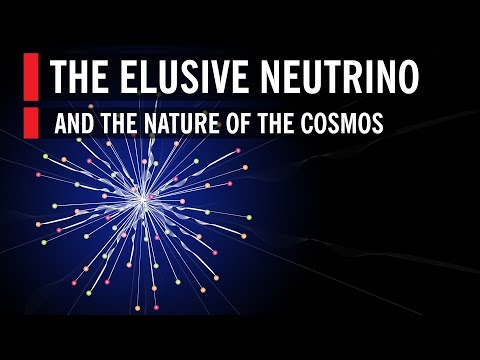
The neutrino is among the cagiest of particles, a subatomic wisp so ephemeral it could pass through light years of lead with more ease than a hot knife through butter. Despite its extraordinary abundance in the universe—billions pass through your body every second—this ghostly particle is notoriously difficult to trap, inspiring some of the most sophisticated detectors in science just to study it. A closer look could change everything. The elusive neutrino holds clues to some of the most profound questions in particle physics: What happened in the briefest moments after the Big Bang? Why does the universe contain more matter than antimatter? Join leading researchers as they chase neutrinos and other elusive particles in search of nature’s fundamental order.
This program is part of the Big Ideas Series, made possible with support from the John Templeton Foundation.
The World Science Festival gathers great minds in science and the arts to produce live and digital content that allows a broad general audience to engage with scientific discoveries. Our mission is to cultivate a general public informed by science, inspired by its wonder, convinced of its value, and prepared to engage with its implications for the future.
Subscribe to our YouTube Channel for all the latest from WSF.
Visit our Website: http://www.worldsciencefestival.com/
Like us on Facebook: https://www.facebook.com/worldsciencefestival
Follow us on twitter: https://twitter.com/WorldSciFest
Original program Date: June 1, 2012
MODERATOR: Bill Weir
PARTICIPANTS: Janet Conrad, Francis Halzen, Lawrence Krauss, John Robinson
Tiny Ghosts - Musical introduction by John Robinson 00:00
Bill Weir's Introduction 3:48
Participant Introductions 5:00
Why are neutrinos important? 6:28
Why go to the antarctic to find neutrinos? 8:44
The ghost particle appears 11:50
Many didn't believe in the neutrino. 16:20
Neutrinos from an atom bomb. 19:45
Ray Davis and his gutsy experiments. 24:08
Key predictions of the standard model. 28:30
Understanding neutrino oscillations. 31:49
Neutrinos and the Grand Unified Theory. 39:24
The supernova that led to neutrinos. 44:02
How do you measure the information from neutrinos. 53:29
A telescope under the ice? 57:00
What is the holy grail on neutrinos. 1:02:00
You can't adjust nature just observe it. 1:07:32
The truth is stranger then star trek? 1:14:20
Can neutrinos move faster than light? 1:18:46

Microbiome expands the genetic and functional capacity of its human host. Susan Lynch explains that human microbiome develops early in life and that gut microbes shape immune function and relate to disease outcomes in childhood. She also explores next-generation microbiome therapeutics and research. Recorded on 11/07/2019. [12/2019] [Show ID: 35240]
More from: Next: UCSF Scientists Outline What’s To Come
(https://www.uctv.tv/mini-med-next)
UCTV is the broadcast and online media platform of the University of California, featuring programming from its ten campuses, three national labs and affiliated research institutions. UCTV explores a broad spectrum of subjects for a general audience, including science, health and medicine, public affairs, humanities, arts and music, business, education, and agriculture. Launched in January 2000, UCTV embraces the core missions of the University of California -- teaching, research, and public service – by providing quality, in-depth television far beyond the campus borders to inquisitive viewers around the world.
(https://www.uctv.tv)

Subscribe to Transatlantic Productions 💥Smash The LIKE Button👍🏿 Share↗️ & hit the Notifications Bell 🔔
Donate so we can complete the upload
https://www.gofundme.com/tapvideo
Cash App: $tapvideo
Share on video on all Social Media.
Videos on Youtube
https://tapvideo.blogspot.com/....2019/06/all-videos-o
Tapvideo Instagram: https://www.instagram.com/tran....satlanticproductions