






- General Videos
- Music
- Economics
- Health
- Travel & Events
- History
- Psychology
- Spirituality
- Movies
- News & Politics
- Kmtyw Combat Sciences
- Ɔbenfo Ọbádélé Kambon Videos
- Ɔbenfoɔ Kamau Kambon: Black Liberation Philosophy
- Science, Tech, Engineering and Math
- Permaculture
- Self-Sustainability
- Living Off Grid
- Yoruba Language Learning
- Education
- Mmɔfra Adesua
- Nana Kamau Kambon Playlist
- Livestream
- Komplementarity Kouples and Revolutionary Singles
- Abibitumi Film Series
- Decade of Our Repatriation
- Kwento xpr
- Live
Top videos


Sources:
Williams, Christopher. "Explaining the Great War in Africa: How Conflict in the Congo Became a Continental Crisis." The Fletcher Forum of World Affairs 37, no. 2 (2013): 81-100.International Crisis Group, “Congo at War: A Briefing on the Internal and External Players in the Central African Conflict,” November 17, 1998.John F. Clark, “Museveni’s Adventure in the Congo War: Uganda’s Vietnam?” in TheAfrican Stakes of the Congo War, ed. John F. Clark (New York: Palgrave Macmillan,2002) Group of Experts on the Democratic Republic of the Congo, “Report of the Panel of Experts on the Illegal Exploitation of Natural Resources and Other Forms of Wealth of the Democratic Republic of the Congo,” April 12, 2001 Nzongola-Ntalaja, Georges. The Congo from Leopold to Kabila: A Peoples History. London: Zed Books, 2013.Music:Dawn without End by Zach HeydeDance & Electronic by Andrew HuangConsequence - Wonders by Kevin MacLeod is licensed under a Creative Commons Attribution license (https://creativecommons.org/li....censes/by/4.0/)Sourc http://incompetech.com/music/r....oyalty-free/index.ht http://incompetech.com/Decisions by Kevin MacLeod is licensed under a Creative Commons Attribution license (https://creativecommons.org/li....censes/by/4.0/)Sourc http://incompetech.com/music/r....oyalty-free/index.ht http://incompetech.com/Exotic Battle by Kevin MacLeod is licensed under a Creative Commons Attribution license (https://creativecommons.org/li....censes/by/4.0/)Sourc http://incompetech.com/music/r....oyalty-free/index.ht http://incompetech.com/Antonio Salieri, Twenty six variations on La Folia de SpagnaLondon Mozart PlayersMatthias Bamert, as conductor

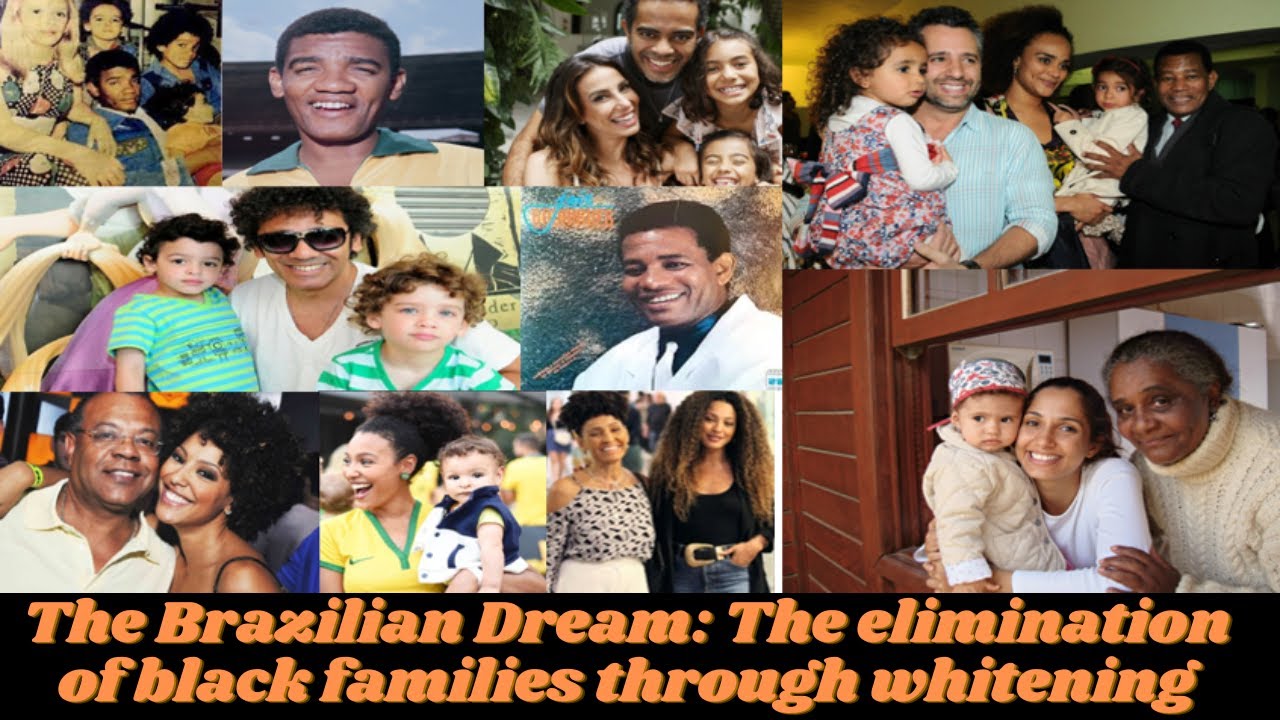
In the the late 19th and early 20th century, the dream of Brazil's elite was the elimnation of black and mixed race people through racial mixture. The country's leadership was concerned with its image around the world as well future success as a nation. This elite class saw the majority population of black and brown people as inferior and responsible for the country's backwardness. The "solution" was opening the country to millions of European immigrants and the elimination of black and mixed race people through the promotion of mixed race unions which they would believed would lead to a Brazil that would eventually be white.
Buy me a coffee and support the channel via CashApp: $MrMarques72
Please Visit our Website to get more information: https://blackbraziltoday.com/
🔔Explore the true narrative of Brazil – Subscribe to Black Brazil Today for insightful discussions on race, culture, and media.🔍
https://www.youtube.com/@black....braziltoday3316/tuto
=============================
✅ Recommended Playlists
👉News and events
https://www.youtube.com/watch?v=PTKDKcWX_vQ&list=PLSk4jWKysUw3ak0abQ3fufWRLQHybwieI&pp=iAQB
👉Black identity in Brazil
https://www.youtube.com/watch?v=N03iDxsJeZg&list=PLSk4jWKysUw0JD8iF0dgUVCJXMBIMMsmG&pp=iAQB
✅ Other Videos You Might Be Interested In Watching:
👉 "I should have 'given it up more' before I got married," says actress Taís Araújo
https://www.youtube.com/watch?v=evaGHrFTlnU
👉"They're not on the brand's level": Clothing brand rep caught dismissing black models in audio leak
https://www.youtube.com/watch?v=yFytSK8xS_U
👉Wearing blackness?: White woman 'turns into' "black woman" for Carnaval
https://www.youtube.com/watch?v=PTKDKcWX_vQ
👉“Brazil never saw black people as beautiful”: The emerging concept of black beauty
https://www.youtube.com/watch?v=O0cSw7RetBw
👉“I never saw myself as a black man”: Reality show contestant discusses how he became black
https://www.youtube.com/watch?v=N03iDxsJeZg
👉Near the end of the slavery era, 60% of enslaved Africans brought to Brazil were children
https://www.youtube.com/watch?v=BEMT0es1P6I
=============================
✅ About Black Brazil Today.
Welcome to Black Brazil Today, a channel that explores black Brazilians' vibrant and diverse experiences✊. Get into our in-depth race, culture, and media discussions, highlighting Brazilian society's significant strides and challenges.
Join us as we dissect racial dynamics, celebrate black Brazilian culture, and amplify voices often unheard. From music and movies to social movements, we bring you the real stories shaping black Brazil's narrative. Subscribe to be part of a community committed to truth, representation, and change. 🎥🌍💬
🔔 Let's Explore the untold stories – Subscribe to Black Brazil Today for the latest on black Brazilians in news, music, and entertainment. 🎵📰
https://www.youtube.com/@black....braziltoday3316/tuto
=================================
ADD HASHTAG HERE
⚠️DISCLAIMER: We do not accept any liability for any loss or damage incurred from you acting or not acting as a result of watching any of our publications. You acknowledge that you use the information we provide at your own risk. Do your research.
Copyright Notice: This video and our YouTube channel contain dialogue, music, and images that are the property of Black Brazil Today. You are authorized to share the video link and channel and embed this video in your website or others as long as a link back to our YouTube channel is provided.
© Black Brazil Today


2016 UG Provost Publications Award: Dr. Obadele Kambon
Kambon, O. (2015). Theory of Endogenous and Exogenous Motivation in L2 Migration. Per Linguam, 31(2). http://dx.doi.org/10.5785/31-2-594
Available as a free download here:
http://perlinguam.journals.ac.....za/pub/article/view/ /
http://ugspace.ug.edu.gh/handle/123456789/7433
https://www.researchgate.net/p....ublication/281107402
https://www.academia.edu/16125....266/THEORY_OF_ENDOGE
ABSTRACT: Implied in theories of Second Language Acquisition (SLA) is the notion that language learning is analogous to obtaining or acquiring a possession – thus the use of the term ‘acquisition.’ While this interpretation has gone relatively unchallenged in the literature, this article introduces a new analogy whereby language learning is seen as analogous to a process of permanent or semi-permanent migration towards a new socio-linguistic L2 space. As such, a theory of endogenous and exogenous motivation is delineated, entailing a dynamic interplay between internal (primarily psychological) and external (primarily sociological) push-pull factors. Endogenous and exogenous push-pull factors, together with various other personal factors, contribute to learner decisions to migrate towards, move away from or remain inert with regard to the target language. Further, motivation is framed in the larger theoretical context of causation.
===============================
UNIVERSITY OF GHANA
COLLEGE OF HUMANITIES
2018 Provost Publications Award
(Early Career)
This Award is presented to Dr. Obadele Kambon (Research Fellow, Institute of African Studies, University of Ghana) as the winner of the 2016 Provost Publications Award (Early Career). The award is based on your Paper titled: "Theory of Endogenous and Exogenous Motivation in L2 Migration" which was published in Per linguam, 31(2)2015" Your article has been noted to be a great input in the area of language teaching and learning and this work will be used by many researchers and foreign language teachers.
Also, your work is deemed as provocative, perceptive and a well researched paper that has unmistakable relevance for the teaching and learning of foreign languages and target languages."
Your write-up is an original contribution which challenges current theories that account for second language acquisition.
Dr. Obadele Kambon , for your outstanding contribution to knowledge and scholarship and for breaking new grounds, the College of Humanities is proud to award you the 2016 Provost Publications Award (Early Career)
Congratulations.
Professor Samuel Agyei-Mensah
Provost

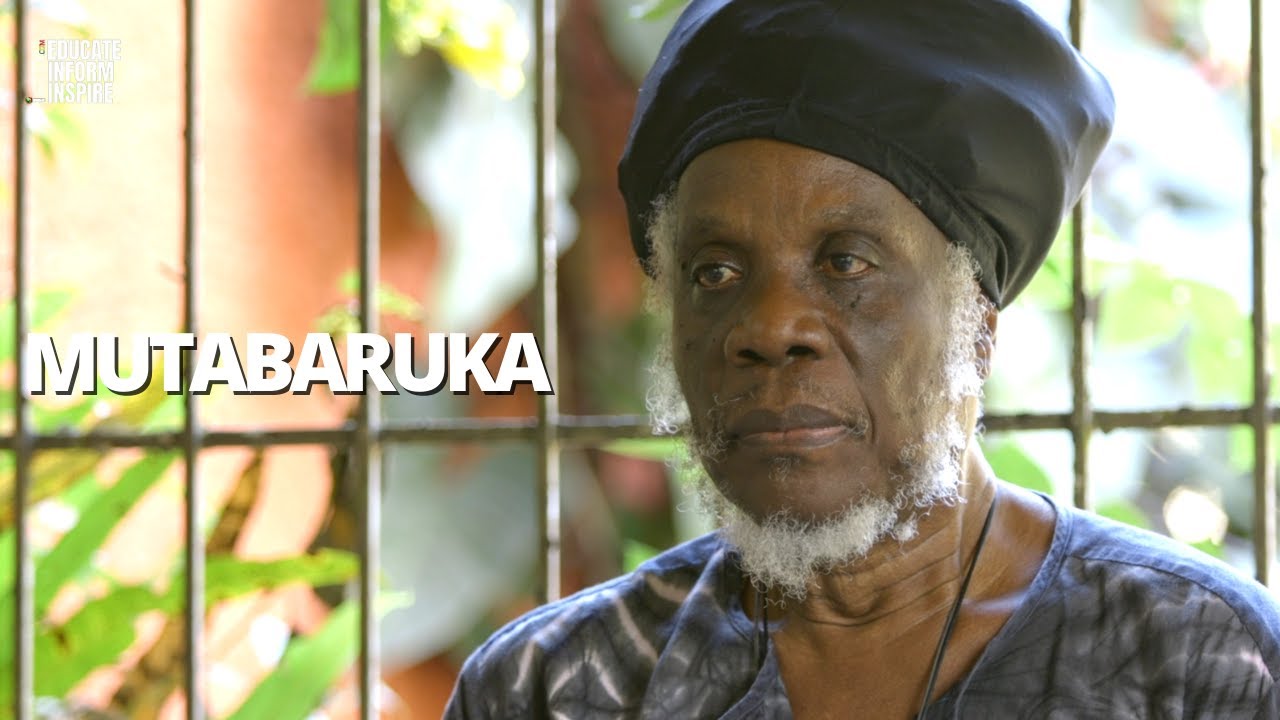

➡️ Sign Up Today To Join The 'I Never Knew Tv' Movement:
https://ineverknewtv.com/sign-up/
➡️ Watch More Reasonings From Mutabaruka:
https://ineverknewtv.com/mutabaruka/
In this reasoning Rastafari dub poet, musician, actor, educator, and radio host Mutabaruka speaks about the importance of 'Black History Month'.
➡️ Please subscribe to Mutabarukas' new internet radio station Rasss Internet: https://rasssinternet.today
➡️ Get Your 'Nyahbinghi Shirt' Today:
https://koncioust.com/products..../queen-muhumusa-empr
➡️ Listen To The 'Generation Gap Riddim':
🔥🇬🇳 https://ingrv.es/generation-gap-riddi-3qn-i 🇬🇳🔥
➡️ Tune into 'I NEVER KNEW 📻'
🇲🇱Roots, Rock, Reggae Music🇲🇱
Hosted By : Jr of 'I Never Knew Tv'
https://www.WLOY.org
Sunday 9 -11 AM EST
Wednesday 8- 10 AM EST
Thursday 10- Noon AM EST
#mutabaruka #blackhistorymonth

In this video, we look at the Second Congo War regarded as the African World war and by far the deadliest conflict since World War 2.
This video is for documentary and educational purposes. No images and footage shown are intended to shock the viewer. Everything is displayed in context and censored as much as possible without sacrificing the need to tell a compelling story with the actual footage.
If you love our work, consider supporting the channel via Patreon:
https://www.patreon.com/bisimedia
Become a Channel Member to get access to perks:
https://www.youtube.com/channe....l/UC9hKpjMxWev7U81xL
Naira Account No:
7810120458, Wema Bank
Buy Kema a Coffee:
www.buymeacoffee.com/kema
*****
Video Sources:
King Leopold's Ghost: A Story of Greed, Terror, and Heroism in Colonial Africa by Adam Hochschild
European Atrocity, African Catastrophe: Leopold II, the Congo Free State and its Aftermath
by Sir Martin Ewans and Martin Ewans
Death in the Congo by Emmanuel Gerard
Katanga 1960-63 by Christopher Othen
The Assassination Of Lumumba by Ludo de Witte
The Diplomacy of Decolonolisation by Alanna O’Malley
The Great African War by Filip Reyntjens
The Epic History of a People by David Van Reybrouck
*****
Clips and Image credits:
Getty Images: https://www.youtube.com/c/gettyimages
AP Archive: https://www.youtube.com/c/APArchive
Maps: https://www.freevectorflags.com
www.vemaps.com
Free Piks: https://www.freepik.com
Adeyinka Makinde: https://www.youtube.com/channe....l/UCKARV7TfiudYewrT1
The Mic I Use: https://amzn.to/3EvGYKD
Music used: Music Used: https://share.epidemicsound.com/b3whp2
#bisi #congo #Mobutu
****
All materials in this video are used for educational purposes and fall within the fair use guidelines. No copyright infringement is intended.
AFFILIATE DISCLOSURE: There may be a few links in this description that, at no cost to you, will earn me a commission if you click them and purchase. Don’t worry, we only ever promote things that have genuinely helped us.
Copyright © Bisi Media 2024




www.MelaninDVDS.com 25 New Films
OVER 3000 Films of Wisdom
RIP to All The Scholars who have passed.
30 DVDS for $100
SPEND OVER $100 AND GET 10 DVDS FREE
DVDS we have: Bro. Polight, Sa Ra Suten Seti, Sa Neter, Dr. Umar Johnson, Bobby Hemmitt, Dr. Jewel Pookrum, Dr. Sebi, Dr. Llaila O. Afrika Black Scholars, Dell Jones, Rudra, Runoko Rashidi, Dr. Frances Cress Welsing, Leonard Jeffries, Naim Akbar, Dick Gregory, Booker T. Coleman, Amos Wilson, Ashra Kwesi, William Mackey, Ishamakusa Barashango, Steve Cokely,James Smalls, Molefi Asante, Dr. Ray Hagin, Bobby Hemmitt, Phil Valentine, Dr. Del Blair, Bro. Dawud Bailey, Dr. John Henrik Clarke, Dr. Yosef Ben Yochannan, Dr. Ben & Dr Clarke, Claude
Anderson, Dr. Ivan Van Sertima, Cheikh Anta Diop, Bro. amar, House of Consciousness, Black Dot, Prof. Griff, Dr. Malachi Z. York, Anthony Browder, Wayne Chandler, Muslim Scholars, Louis Farrakhan, Hon. Elijah Muhammad, Malcolm X, Khalid Muhammad, Wesley Muhammad, ISLAM, Muslim, Sunni, Hittite, Shia, NOI, FOI, Khalid Muhammad, Minister Fard, Noble Drew Ali, Sharazhad Ali, Mecca, Ramadan, Bro. Mahir, Marcus Garvey, Halie Selassie
The Moor Scholars: Taj Tarik Bey, Sabir Bey, Queen Mother, Azzaziel Bey, A.A. Rashid, law, Sovereignty, Quballah, metaphysics, Alim Bey, Azzaziel Bey, Sister Myra – El, Dr. Jose Pimenta Bey, Taj Tarik Bey,TrueMaster, Aseer the Duke of Tiers, A.A Rashid, Alim Bey, C. Freeman-El, , Queen Mother, Ali Muhammad Sabir Bey, Yaffa Bey, Hakim Bey, Bro. Anpu
@twitter @netflix @vimeo @youtube @snapchat @vine @hotmail.com @msn @yahoo @aol @nytimes@latimes

Black Power Film Festival: What Black Power Is
700+ Black power films submitted
16 selected
4 celebrity judges
3 days new films each day
2 platforms - online virtually and live Ghana
1 you, experiencing the Abibtumi Abibifahodie Film Festival
Buy tickets at https://FilmFestival.Abibifahodie.org
https://www.abibitumi.com

Socialite Dayane Alcântara, a Brazilian and naturalized American citizen, was recently sentenced to nearly nine years in prison by a federal judge in Rio de Janeiro for the crime of using racial slurs against the 4-year daughter of a popular Brazilian couple.
Please Visit our Website to get more information: https://blackbraziltoday.com/
🔔Explore the true narrative of Brazil – Subscribe to Black Brazil Today for insightful discussions on race, culture, and media.
✅ About Black Brazil Today.
Welcome to Black Brazil Today, a channel that explores black Brazilians' vibrant and diverse experiences✊. Get into our in-depth race, culture, and media discussions, highlighting Brazilian society's significant strides and challenges.
Join us as we dissect racial dynamics, celebrate black Brazilian culture, and amplify voices often unheard. From music and movies to social movements, we bring you the real stories shaping black Brazil's narrative. Subscribe to be part of a community committed to truth, representation, and change. 🎥🌍💬
🔔 Let's Explore the untold stories – Subscribe to Black Brazil Today for the latest on black Brazilians in news, music, and entertainment. 🎵📰
https://www.youtube.com/@black....braziltoday3316/tuto
=================================
#racisminbrazil #brazil #blackchild #racialslur #racismisacrime #mixedrace #racialidentity #blackness #daymccarthy #brunogagliasso #giovannaewbank
⚠DISCLAIMER: We do not accept any liability for any loss or damage incurred from you acting or not acting as a result of watching any of our publications. You acknowledge that you use the information we provide at your own risk. Do your research.
Copyright Notice: This video and our YouTube channel contain dialogue, music, and images that are the property of Black Brazil Today. You are authorized to share the video link and channel and embed this video in your website or others as long as a link back to our YouTube channel is provided.
© Black Brazil Today


How Can I Get A Visa In Tanzania? In this Episode we walk you through the process of how to apply and successfully secure your visa for visiting Tanzania.
Official Tanzania E-visa Website:https://eservices.immigration.go.tz/visa/
Connect on twitter for YouTube updates and more info about Africa - @smartuptravel
Follow me on Instagram for Travel Motivation and Africa's Best Kept Secrets. /smartuptravel
NOTE: Smartup Travel was not sponsored for this video.