








- General Videos
- Music
- Economics
- Health
- Travel & Events
- History
- Psychology
- Spirituality
- Movies
- News & Politics
- Kmtyw Combat Sciences
- Ɔbenfo Ọbádélé Kambon Videos
- Ɔbenfoɔ Kamau Kambon: Black Liberation Philosophy
- Science, Tech, Engineering and Math
- Permaculture
- Self-Sustainability
- Living Off Grid
- Yoruba Language Learning
- Education
- Mmɔfra Adesua
- Nana Kamau Kambon Playlist
- Livestream
- Komplementarity Kouples and Revolutionary Singles
- Abibitumi Film Series
- Decade of Our Repatriation
- Kwento xpr
- Live
Top videos
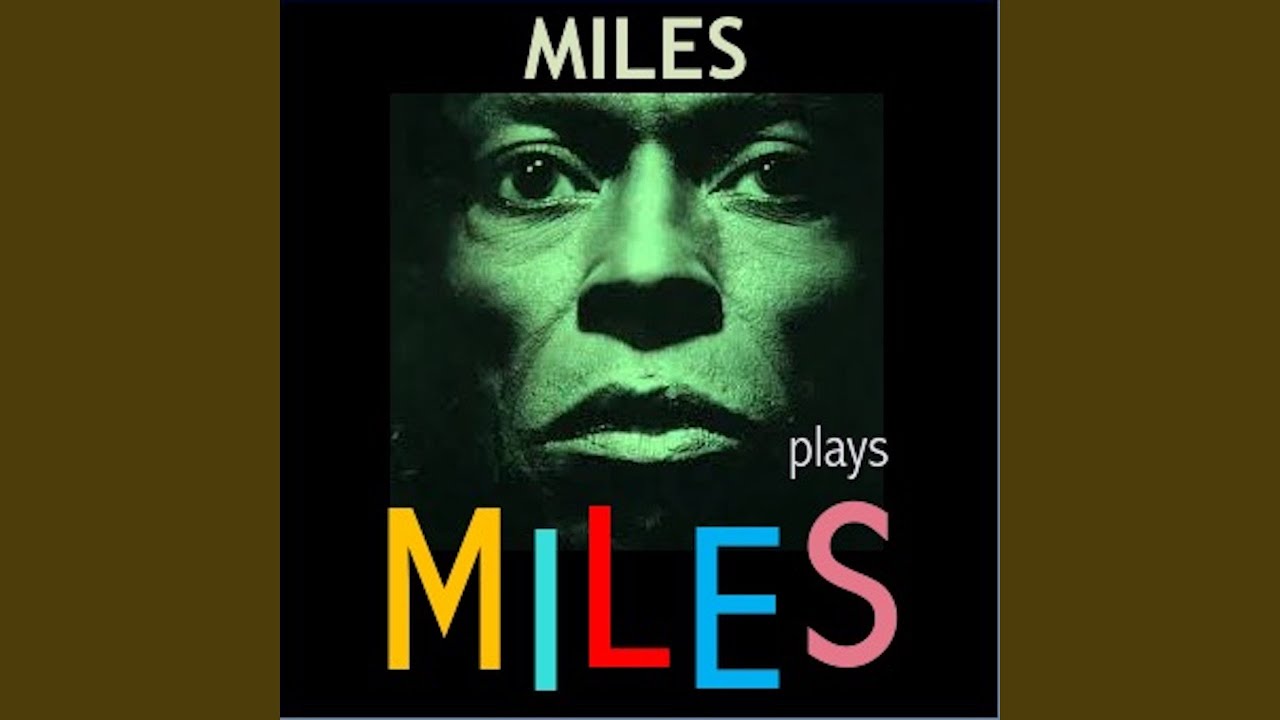


![Fela Kuti - Gentleman (LP) [1973]](https://i.ytimg.com/vi/amW0M3_xeyE/hqdefault.jpg)

Gentleman (LP) (1973) Fela Kuti
Songs include Gentleman / Igbe (Na Shit) / Fe Fe Ne Eye Fe
http://fela.net/discography/
This video is part of a series of songs being posted on Fela's official YouTube channel (http://www.youtube.com/fela) each featuring, alongside the music, an informative commentary by Afrobeat Historian, Chris May.
The entire catalogue, released on Kntting Factory Records, is available on the Fela website (http://fela.net/), along with documentaries and recorded concerts, CDs and vinyl, tee shirts, posters and many other items.









How do language, culture, history, and African-centered ways of knowing help us understand the connections among African people across time and geography?
In this UWP Scholar Spotlight, contributing scholar Talawa Adodo, Ph.D. discusses his contribution to Transcendental Africanity: The Key to Defeating Afrophobia and Reclaiming Global Africa, edited by Mohamed Saliou Camara, Ph.D.
Dr. Adodo’s scholarship engages African civilizations, African and Afro-Caribbean languages, Africology, cultural continuity, and questions of African identity across time and space. His contribution to Transcendental Africanity enters the volume’s larger conversation about Africanity, Global Africa, cultural memory, identity, language, Afrophobia, belonging, resistance, and African self-determination.
His work invites us to consider an important question at the heart of the volume:
How do African people understand themselves, their histories, and their connections to one another through African-centered intellectual and cultural frameworks?
Through the UWP Scholar Spotlight Series, readers move beyond the chapter title to encounter the scholars, questions, intellectual traditions, and research behind the scholarship.
ABOUT TRANSCENDENTAL AFRICANITY
Transcendental Africanity: The Key to Defeating Afrophobia and Reclaiming Global Africa brings together ten chapters by nine scholars examining the enduring connections among Africans and Afro-descendants while confronting the historical and contemporary forces that have produced separation, displacement, and Afrophobia.
The volume creates an interdisciplinary space for thinking about Africanity, identity, culture, language, historical memory, belonging, resistance, sovereignty, and African self-determination while asking what these ideas might mean for the future of Global Africa.
The book offers relevance for African Studies, Africana Studies, Black Studies, African Diaspora Studies, Africology, History, Political Science, Cultural Studies, Language Studies, and related interdisciplinary fields.
FOR FACULTY, STUDENTS, LIBRARIANS & RESEARCHERS
Dr. Adodo’s Scholar Spotlight provides another pathway into the individual scholarship contained within this interdisciplinary volume.
For faculty, it offers an entry point for classroom discussion and course consideration.
For students and researchers, it introduces questions and concepts that can be interrogated, cited, challenged, and extended.
For librarians, it provides greater visibility into the scholars and intellectual breadth represented within the collection.
📚 BOOK INFORMATION
Transcendental Africanity: The Key to Defeating Afrophobia and Reclaiming Global Africa
Editor: Mohamed Saliou Camara, Ph.D.
Publisher: Universal Write Publications
Publication Date: September 29, 2026
Print ISBN: 978-1-942774-35-8
eBook ISBN: 978-1-942774-34-1
LCCN: 2026902889
DOI: 10.65724/DWCO4934
PREORDERS ARE OPEN NOW.
UWP SCHOLAR SPOTLIGHT SERIES
The UWP Scholar Spotlight Series brings audiences closer to the scholars behind the scholarship.
Through conversations with UWP authors, editors, and edited-volume contributors, the series creates a growing digital archive of the people, ideas, research, and intellectual traditions advancing Black scholarship and interdisciplinary inquiry.
For contributors to edited volumes, Scholar Spotlight provides dedicated visibility for their individual scholarship, connecting their contribution to the larger intellectual conversation of the book while extending the discoverability and scholarly life of their work beyond the printed page.
Explore the UWP Scholar Spotlight Series at UWPBooks.com/authors.
Subscribe to UWP Books on YouTube for additional Scholar Spotlights, author conversations, books, research, and scholarship from Universal Write Publications.
Read the scholarship. Meet the scholar. Continue the conversation.
Universal Write Publications
We Will Tell Our Own Story.
#talawaadodo #transcendentalafricanity #africanity #globalafrica #africology #africancivilizations #africanlanguages #africandiaspora #afrophobia #africanstudies #africanastudies #blackstudies #africanscholarship #blackscholarship #scholarspotlight #scholarshipinconversation #uwpbooks #wewilltellourownstory


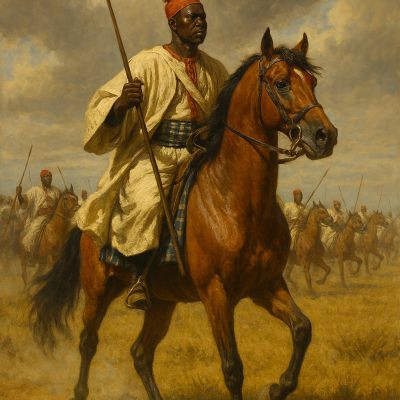
The Dahomey Amazons were an all-female military regiment of the Kingdom of Dahomey which existed from the 1600s until 1904. They are one of the few documented female armies in modern history. Also known as the ‘Agojie’. They were although not a very humane group of people. Heavily involved in slave raids and the selling of peaceful captured Africans to the Atlantic Slave Raid.
The leader, King Ghezo refused to end the raids and sale of slaves when the British abolished slavery and slavery through the ports. They were notorious for ravaging peaceful villages, beheadings and thousands of custom sacrifices of captured people. The also hand many friendly dealings with Francisco Felix de Souza, (The Great Slave Trader) who was very close to King Ghezo.
The last known slave ship, Clotilda, that transported 115 slaves that was captured and sold by the Dahomey Kingdom to America.
Sources:
https://www.litnet.co.za/the-a....frican-library-barra
https://en.wikipedia.org/wiki/Dahomey_Amazons
https://www.smithsonianmag.com..../history/real-warrio
https://www.nationalgeographic.....com/history/article
https://www.historyvshollywood.....com/reelfaces/woman
http://encyclopediaofalabama.org/article/h-1403
https://en.wikipedia.org/wiki/Cudjoe_Lewis
https://www.smithsonianmag.com..../smithsonian-institu

Hausa architecture of Northern Nigeria and Niger Republic
// Architecture haoussa du Niger et du Nord du Nigeria.
ENGLISH (French below/Français plus bas):
Hausa architecture is a distinct sub-style among the different Sudano-Sahelian architectural styles found throughout the Sahel-geographic band of Africa. It is mostly prevalent in the Hausaland region (North Western Nigeria and Southern Niger Republic) inhabited by the Hausawa people, but the previous popularity of Hausa architects brought it to Northern Niger and Cameroon. The one or two storey buildings are made with dry mud bricks. They are characterized by the extensive use of parapets, the stucco detail used for decoration on the facades, and the Hausa vault.
Different types of urban houses, royal palaces and mosques can be seen in this video,
FRANÇAIS :
L’architecture haoussa est une branche distincte de l’architecture Soudano-sahélienne du Sahel africain. On la retrouve principalement dans la région du Pays Haoussa (Nord-ouest du Nigeria et Sud de la République du Niger), habitée par le peuple Hausawa ou Haoussa, mais la popularité ancienne des architectes haoussas l’a amenée jusqu’au Nord du Niger ou du Cameroun. Les bâtiments, d’un ou deux étages, sont construits avec des briques en terre séchée. Ils sont caractérisés par l’usage récurrent de parapets, de détails en stuc pour la décoration des façades, ainsi que de la voûte haoussa. Divers exemples de maisons citadines, palais royaux et mosquées sont présentés dans cette vidéo.
For more information / Pour plus d’informations :
Building facades in Hausa architecture: http://www.thinkingafritecture.org/?p...
Hausa architecture on afropedea: http://www.afropedea.org/hausa-archit...
MUSIC / MUSIQUE:
ABDOU SALAM, Dunia Labari
MAMMAN SANI, Dan Yar Mata
SAADOU BORI, Yelleru
AKAZAMA, Chakirari
![Sudan: The Nubian Caravans - The Secrets of Nature [2014]](https://i.ytimg.com/vi/dBZNMsmNNZc/hqdefault.jpg)

https://aiyawodemaya.com/Donate & Support Me On Go Fund Me:https://www.gofundme.com/africa-to-the-worldDonate & Support the Channel on Patreon:https://www.patreon.com/wode_mayaDonate and Support me on Paypal:https://www.paypal.me/wodemaiya


#movetoghana #livinginghana #ghanaexpatlife #lifeinghana
MOVED FROM THE USA TO GHANA, I NOW OWN OVER 46 ARCS OF FARMLAND IN GHANA
Can you become a millionaire through farming? In this eye-opening interview, I speak with Calvin Daniels, a retired U.S. Air Force Master Sergeant who relocated to Ghana to start an agriculture business. He now owns 46 acres of farmland, growing Moringa, snails, and more.
Guest Info : Calvin Daniels (CEO)
Contact number :+233 55 200 4805 /+1 817 983-8997
Email : sh_agri_supply@yahoo.com
website : HTTP://shsaafltd.com/
location :Shai Hills
Farm manager (Smart Agbo)
for Consultation contact him on :+233597972008
Moringa is an industry worth $8 billion, projected to reach $18 billion by 2030. Every part of the tree is valuable, making it one of the most lucrative crops for farming. Watch as Calvin breaks down the numbers, the profitability of Moringa farming, and why Africa, especially Ghana, is set to become a global agricultural powerhouse.
If you're a diasporan from the U.S., UK, or Caribbean, thinking farming is only for the poor, this video is for you. Learn how you can turn agriculture into generational wealth!
Farming in Ghana,Moringa farming business,Agriculture investment in Africa
How to make money from farming,Retiring in Ghana,Diaspora moving to,Africa,Profitable farming business ideas,Agriculture for young entrepreneurs,Moringa tree benefits,Ghana land investment,Farming for financial freedom,Agriculture opportunities in Africa,Wealth from farming
African American entrepreneurs in Ghana,Starting a farm in Africa,Expat life in Ghana,Ghana business opportunities,Moringa farming business
Agriculture investment in Africa,Profitable crops to grow in Ghana
Farming for financial success,Best cash crops in Africa,Moringa export business,How to start farming in Ghana,Diaspora relocating to Ghana
Retiring in Ghana as an expat,African American farmers in Ghana,How to buy land in Ghana,Farming success stories in Africa,Agriculture business ideas for youth,Wealth creation through farming,Moringa health benefits,Investing in African agriculture,Farming in tropical climates,Millionaire farmers in Africa,Agriculture and land ownership in Ghana
#moringafarming #agribusiness #farminginghana #makemoneyfarming #ghanaagriculture #africaninvestment #ghanafarming #diasporareturn #movingtoghana #africaopportunities #millionairefarmers #exportbusiness #moringahealth #ghanabusiness #retireinghana #blackexcellence #wealthinafrica #sustainablefarming #farmersofafrica